The 500 hour yoga teacher training in Rishikesh at Rishikesh Nath Yogshala costs $880 all-inclusive in the dormitory tier, $1,650 for a twin-shared room and $2,200 for a private room. It runs 51 days, residential, starting 5th monthly, and is Yoga Alliance certified. The price covers accommodation, three sattvic meals a day, study material, weekend excursions and certification — there are no hidden charges.
The 500 hour training at Rishikesh Nath Yogshala is the school's foundation course and its advanced course run together, back to back, inside a single long residency. You do not book the 200 hour training, go home, and come back later for the 300 hour. You arrive once, and the two curricula are sequenced for you across one continuous stay, so the transition from beginner to advanced student happens without a second flight, a second visa application, or a second round of settling in. It is the longest course the school runs, and it is worth being direct about what that means before you book it: a residency this long is a real chunk of time away from ordinary life, not a two-week break with yoga attached.
Because the residency runs long, two things need to be true before you commit. Your visa needs to comfortably cover the whole stay, which the arrival section further down this page covers in detail, and your life outside Rishikesh needs to be able to absorb an absence this size, whether through savings, a sabbatical, or treating the course as the pivot point in a genuine career change rather than trying to run a job remotely around early starts six days a week. If that describes your situation, read on. If it does not, the school's shorter courses, covered further down this page, may fit your life better right now.
The training draws on the same Nath lineage the school takes its name from, the Himalayan tradition associated with Guru Gorakhnath, and is taught throughout by the same small core team who teach the school's other residencies, so you are not handed to a different set of teachers when the curriculum shifts from foundation to advanced. The same honest-pricing approach applies here as everywhere else at the school: one number, quoted before you book, with nothing sprung on you after you land in Rishikesh. What the fee covers is set out in full below.
Here is exactly what is included in the 500 hour course fee, item by item, so there is nothing left to guess at once you have arrived.
| Included in the course fee | Not included in the course fee |
|---|---|
| Free pickup from Dehradun (DED) airport on arrival | SIM card, phone data or personal calls |
| Shared or private accommodation for the full residency | Visa costs and any visa service fees |
| Three sattvic meals a day, plus herbal tea | Flights to and from India |
| Filtered drinking water throughout your stay | Travel insurance |
| Course manuals and printed study materials for both phases | Extra nights before the course starts or after it ends |
| A weekend excursion into the Himalayan foothills | Optional excursions outside the included itinerary |
| A guided visit to the Ganga aarti | Additional spa or wellness treatments beyond the included massage |
| One ayurvedic massage during the residency | Personal dry cleaning beyond regular laundry access |
| Wifi and laundry access for the full stay | Postage for a physical copy of your certificate |
| Your Yoga Alliance-recognised certification on completion | |
Free pickup from Dehradun airport is included with every residential course on arrival; ask the school about return drop-off when you book.
The fee is one number, quoted before you book, and it does not creep upward the longer you are here. There is no separate invoice halfway through when the training shifts from foundation to advanced material, and no line item that appears only once you have already settled in with nowhere else to stay. You should not have to break the bank to train this seriously. The exact fee, along with the current batch dates, is shown further down this page.
The 500 hour curriculum is not a single new syllabus invented for this course. It is the school's 200 hour foundation training and its 300 hour advanced training, taught in full and in the same order, with no gap between them. The foundation phase comes first and has to be completed properly before the advanced phase begins, because everything in the advanced phase assumes the foundation is already solid. Below is what each phase covers.
The opening phase of the residency builds the same multistyle foundation the school's standalone 200 hour students train through: how to move safely, how to breathe with intention, and how to cue a class so a room full of strangers can follow you. By the time this phase ends, you should be able to teach a competent general class in more than one style, not just recite a memorised sequence.
Joint-freeing warm-ups, standing and seated postures, backbends and forward bends, and the alignment principles that make each pose safe to hold and safe to adjust. This is where the cueing language for the entire residency is built: how to bring a student into a pose, read whether their alignment is safe, and bring them back out of it again.
The standing sequence, the seated postures that follow it, and the finishing sequence, practised enough times to feel the internal logic of a set series rather than an improvised class, and to understand why a fixed sequence practised daily is such a different teaching tool.
Where Ashtanga hands you a fixed sequence, Vinyasa hands you the principles for building your own: linking breath to movement, building intensity across a class and bringing it back down before rest, and sequencing toward a peak posture with intention rather than at random.
Precision alignment work using blocks, straps and bolsters, so a student can feel a posture correctly before attempting it unsupported. You learn to use props as teaching tools, useful for beginners, for injury modification, and for refining a pose an advanced student has practised for years.
Long-held, passive postures that work into connective tissue rather than muscle, supported by props and stillness. This rounds out the foundation phase so you leave able to teach a slow, quiet class as competently as a fast one.
Breath as a practice in its own right, alongside shatkarma, the traditional Hatha Yoga Pradipika purification practices such as jal neti and kunjal, taught with the care and hygiene they require. This module sits at the heart of the school's Nath lineage roots.
An introduction to Patanjali's Yoga Sutras, taught by Rahul Badoni, the school's co-founder, so that when a student later asks you why yoga is more than exercise, you already have an answer that goes deeper than a slogan.
The skeletal, muscular, circulatory, nervous and respiratory systems as they relate directly to asana: which joints move in a given posture, which muscles are working, and where a student is most likely to get hurt if a pose is rushed.
Planning and running a class from the first minute to the last, classroom management, verbal cueing, hands-on adjustment, and how to modify a posture for an injury, led by Mayuri Shewale, the school's founder and lead teacher and an E-RYT 500 with Yoga Alliance.
Supervised teaching practice in front of your fellow trainees, with feedback each time, so that the first advanced content you meet in the second phase builds on real teaching experience rather than theory alone.
Once the foundation phase is behind you, the residency moves directly into the advanced curriculum without a break in the rhythm you have already built. This phase does not repeat what you have just learned; it assumes it, and pushes further into hands-on adjustment, deeper philosophy, Ayurveda, and the practical business of building a teaching career once you leave Rishikesh.
More demanding postures and transitions, alongside a much deeper focus on hands-on adjustment: how to read a student's body safely, when to touch and when not to, and how to modify a pose for an injury without breaking the flow of a class.
A fuller treatment of shatkarma and more demanding pranayama practices than the foundation phase covers, taught with the precision this level of practice requires now that the basics are already second nature.
Where the foundation phase introduces the Yoga Sutras, this module studies them properly, sutra by sutra, taught by Rahul Badoni, building a working understanding you can actually teach from rather than a memorised summary.
Yoga's sister science: the three doshas, how constitution shapes what practice suits a given student, and how diet and daily rhythm connect back to the physical practice you are already teaching by this point in the residency.
The nadis and chakra system as described in the classical texts, and how this framework relates to the pranayama and meditation practice you built in the foundation phase, rather than a decorative overlay added on top of it.
Adapting a class for students who are not simply "beginner" or "advanced": older students, pregnant students, students recovering from injury, and mixed-level classes where one sequence has to work for very different bodies at once.
What a foundation-only certificate does not cover: approaching studios, building a private client base, running your own workshops, or teaching online, led by Mayuri Shewale.
A second, more demanding round of supervised teaching, this time with the adjustment and sequencing skills from the advanced phase folded in, so the class you teach in your final days here looks nothing like the one you taught in your first weeks.
Every module above is taught by one of the school's named core teachers. Meet the full team, including Mayuri Shewale, Rahul Badoni and Swami Anand, on the teachers page. If you would rather see the two phases as standalone courses in their own right, the 200 hour training and the 300 hour training each have their own dedicated page.
The residency runs on a fixed daily rhythm throughout, in the foundation phase and the advanced phase alike. What changes between the two is not the shape of the day but what fills it. Sunday stays the day off across the whole stay, and most students use it to rest, explore Rishikesh, or simply sit by the river.
| Time | Foundation Phase | Advanced Phase |
|---|---|---|
| 05:30 | Wake up | Wake up |
| 06:00 | Herbal tea | Herbal tea |
| 06:30 | Hatha yoga practice | Advanced asana practice |
| 08:00 | Pranayama and shatkarma | Advanced pranayama and kriya |
| 09:00 | Breakfast | Breakfast |
| 10:30 | Anatomy or teaching methodology | Yoga Sutras or Ayurveda |
| 11:45 | Teaching methodology or anatomy | Sequencing workshop or subtle body study |
| 13:00 | Lunch | Lunch |
| 15:30 | Foundation philosophy | Business of teaching |
| 16:30 | Ashtanga or Vinyasa practice | Practicum: teaching and hands-on adjustment |
| 18:00 | Meditation or yoga nidra | Meditation |
| 19:30 | Dinner | Dinner |
| 21:00 | Lights out | Lights out |
Sound healing is folded into the residential rhythm of Rishikesh Nath Yogshala rather than sold as an extra. Sessions with singing bowls run alongside the regular schedule in both phases, giving you sound as a personal practice, what it feels like to lie in savasana while a bowl is played around you, and as a teaching tool you can bring into your own classes once you are certified.
For students who want to specialise further, the school also runs a separate sound healing program structured across three progressive levels. You do not need to book that program to experience sound healing during your 500 hour residency; it is already part of what you are here for, at no extra cost.
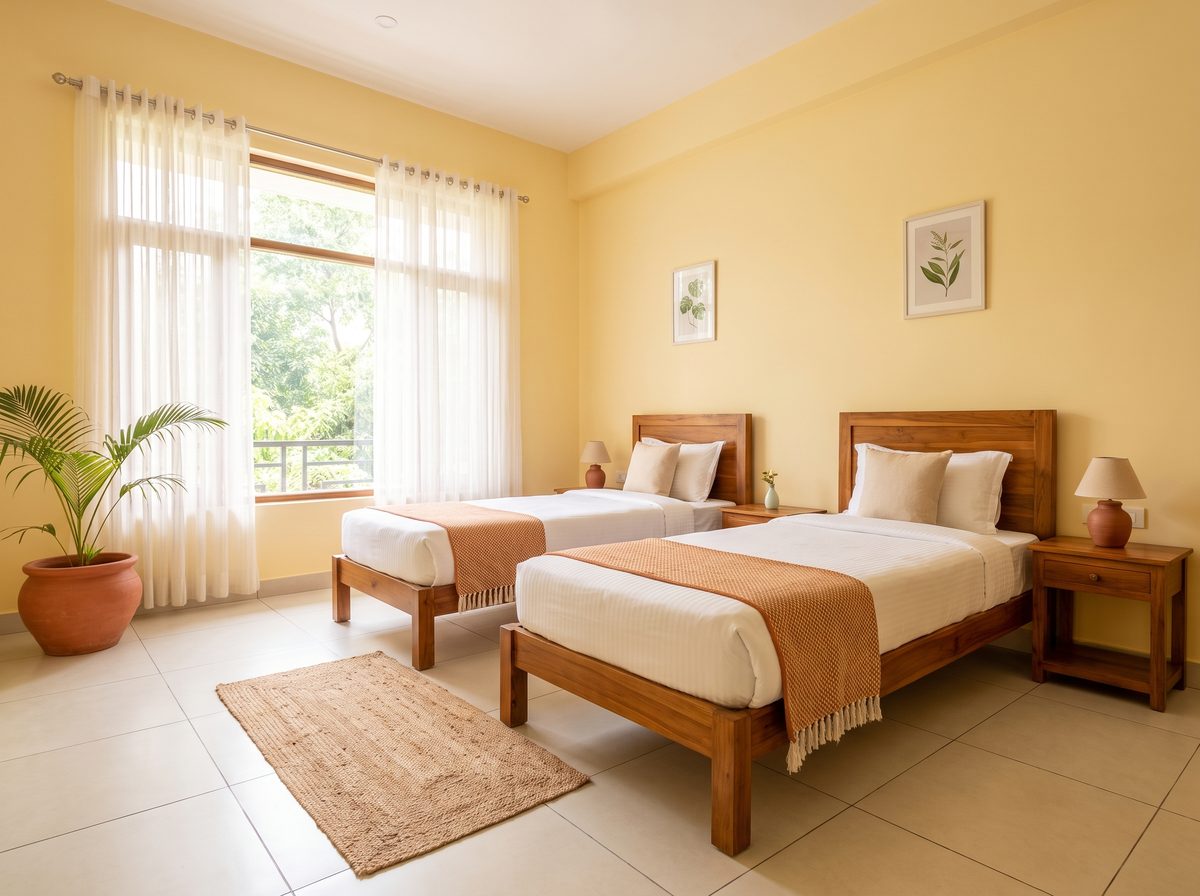
Accommodation is on-site for the entire residency, in separate dormitories for men and women, priced exactly the same regardless of which one you are staying in. Your room, like your teachers, stays constant across the whole stay; you are not moved between rooms or buildings when the curriculum shifts from foundation to advanced. Full room layouts, including bathroom arrangements, are shown on the food and accommodation page. Wifi and laundry access are available on-site throughout.
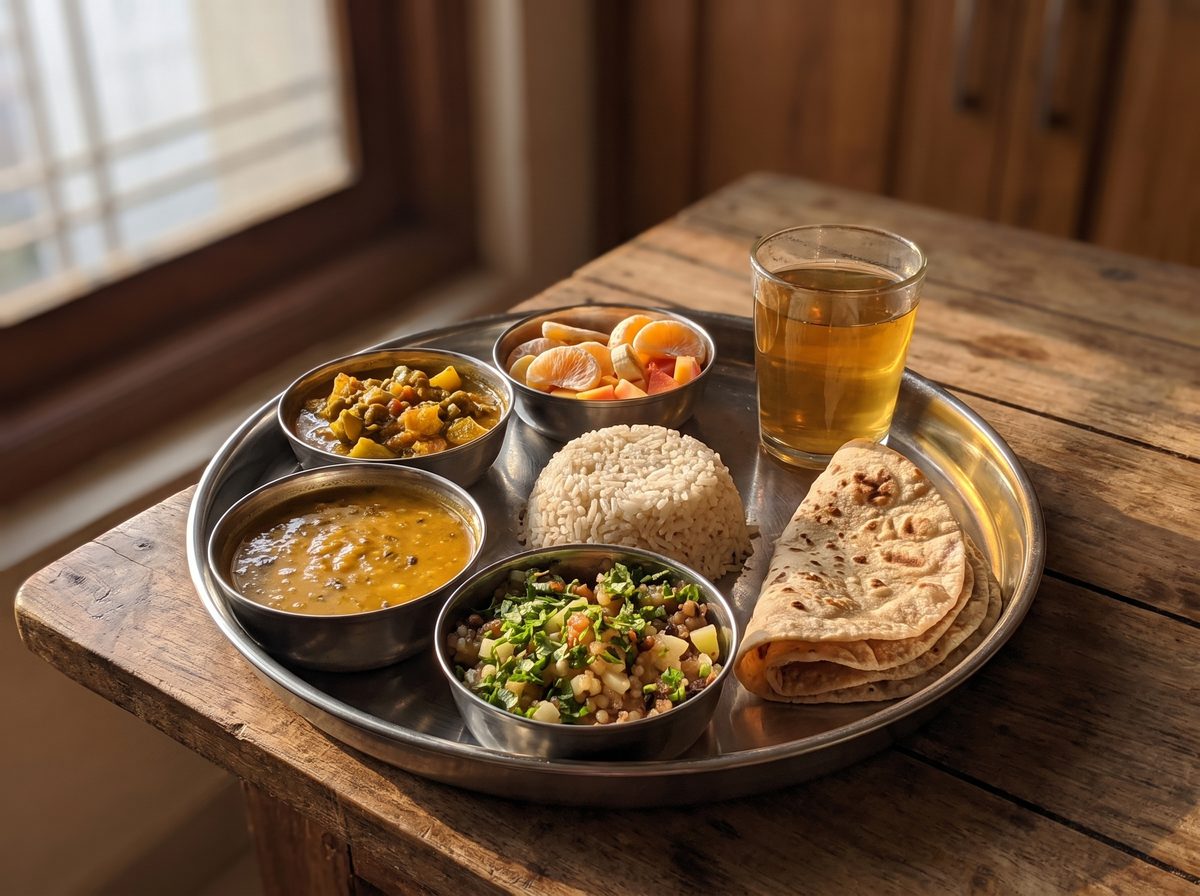
Food is three sattvic meals a day, vegetarian, prepared in the school's own kitchen, with herbal tea between meals and filtered drinking water available at all times. Sattvic food, in the yogic sense, means simple, fresh and easy to digest, which matters over a residency this long. If you have a genuine allergy or dietary restriction, raise it with the school before you arrive so the kitchen can plan around it for the whole stay.
A full walkthrough of the rooms, the kitchen and what a typical day of meals looks like, with photos, is on the food and accommodation page.
Rishikesh Nath Yogshala is a Registered Yoga School at both the 200 hour level (RYS 200) and the 300 hour level (RYS 300) with Yoga Alliance, the international body most studios and employers check against when they hire a yoga teacher. Completing this residency and meeting its attendance and practicum requirements in both phases earns you certification from the school covering the full combined training, foundation and advanced together.
It is worth being precise about what that certification does and does not do on its own. Five hundred hours of training from a Yoga Alliance-recognised school makes you eligible to register as a Registered Yoga Teacher at the 500 hour level (RYT-500) on Yoga Alliance's own registry. Eligible is the operative word. Registering is a separate step you take yourself, directly with Yoga Alliance, after you finish this course: creating a profile on their site, submitting your completion certification, and paying Yoga Alliance's own registration fee. That fee belongs to Yoga Alliance, not to the school, and it is not part of what you pay Rishikesh Nath Yogshala for the residency. Nobody registers you automatically the moment you graduate. The paperwork and the choice are yours to make, on your own timeline, after you leave.
The nearest airport is Dehradun (DED), Jolly Grant Airport, which has direct flights from Delhi and a handful of other Indian cities. From Dehradun, Rishikesh is a straightforward taxi ride, and the school can help arrange transport if you share your flight details ahead of time. If you would rather travel partly by train, the nearest railhead is Haridwar, which has far better long-distance rail connections than Rishikesh itself and is a short drive from the school.
Because this is the longest course the school runs, arrival planning matters more than it would for a shorter stay, and the visa question deserves real attention rather than an assumption that your usual travel routine covers it. Build in a buffer day before your batch begins rather than arriving the morning it starts. Most nationalities can apply for an Indian tourist e-visa online, issued in different validity lengths; check the validity period on offer for your passport and confirm it comfortably covers the whole residency plus buffer days on either end, not just the exact length of the course. Rules and eligible countries change, so confirm the current terms for your own passport well before you book flights.
What to pack for a stay this long: comfortable, modest clothing you can move in for asana practice and enough of it to get you through many laundry cycles, since Rishikesh is a spiritual town and how you dress around the school and its temples matters more than it might at a yoga studio back home. Bring a notebook for the philosophy, Ayurveda and business-of-teaching material in the advanced phase; handwritten notes hold up better than good intentions. A light jacket for cooler mornings and evenings, a reusable water bottle, and any personal medication you take round out the list, since finding a specific foreign brand locally is not guaranteed.
A stay this long is likely to run across more than one season, so pack in layers rather than betting on a single forecast. Rishikesh sits at the base of the Himalayan foothills: light daytime layers suit spring and autumn, breathable, quick-dry clothing plus a jacket for the early starts suits summer, and a proper warm layer, closed shoes and something thermal for the pre-dawn walk to the shala suits winter, when the cold surprises visitors who picture Rishikesh as tropical year-round.
The honest answer is that most students are better served taking the 200 hour training first, going home, teaching for a while, and coming back for the 300 hour later, once they know from real experience that they want to go further. That path gives you a natural pause to test whether teaching suits the life you actually have. If any part of you is unsure whether this is a career change or an experiment, the standalone 200 hour training is very likely the better starting point, with the 300 hour training waiting for you whenever you are ready to return.
Taking both phases in one continuous stay saves you a second flight, a second visa process, and a second adjustment period, and lets you carry momentum straight from the foundation phase into the advanced one without the gap in practice a return trip would create.
Be realistic about the physical and logistical demand before you book. This is not a wellness holiday with yoga attached; it is the school's longest and most intensive training, with attendance requirements and two separate practicums you have to complete to graduate, and a body that will be genuinely tired for a sustained stretch, not just the first difficult week. It also asks the most of your life outside Rishikesh: the time away, the visa planning, and the budget all scale with the length of the stay. Students who do best here are the ones who arrive having already decided this is the direction they are heading in, not the ones hoping the residency will make that decision for them.
All classes are taught in English across both phases, and a working conversational level is assumed throughout the residency, since the philosophy, Ayurveda and business-of-teaching material in the advanced phase moves quickly. Spanish-speaking support is available on request if you let the school know when you enquire or book.
Trainees come from a range of countries and backgrounds, and the school is used to hosting a genuinely international group across a residency this long. If you have a specific language or communication need beyond English or Spanish, ask before you book. The school would rather know in advance than have you discover a gap once you are already partway through the foundation phase.
The curriculum content is the same: the full 200 hour foundation followed by the full 300 hour advanced training. The difference is structural. Taken together as the 500 hour residency, the two phases run in one continuous stay with no gap between them, rather than as two separate visits to Rishikesh booked months or years apart.
Accommodation for the full residency, three sattvic meals a day plus herbal tea, filtered drinking water, course manuals for both phases, a weekend Himalayan excursion, a guided Ganga aarti visit, one ayurvedic massage, wifi, laundry access and your Yoga Alliance-recognised certification on completion. What is billed separately is listed in the table above.
No formal certification is required to start, since the residency opens with the full foundation phase. You should have kept some kind of regular yoga practice going for a few months before you arrive, so your body has a base to build the foundation phase on before the training moves into more demanding advanced material.
Rishikesh Nath Yogshala is a Registered Yoga School at both the 200 hour level (RYS 200) and the 300 hour level (RYS 300) with Yoga Alliance. Completing this residency makes you eligible to register yourself as an RYT-500 on Yoga Alliance's own registry afterward, as a separate step at their own fee.
Most nationalities can apply for an Indian tourist e-visa online, issued in different validity lengths depending on nationality. Because this is the school's longest course, check the validity period available for your passport and confirm it comfortably covers the whole stay plus buffer days, rather than assuming a shorter previous trip's visa terms will apply. Confirm the current rules for your own passport well before booking flights.
The foundation phase covers Hatha, Ashtanga, Vinyasa, Iyengar-influenced alignment, Yin and restorative yoga, pranayama, foundation philosophy, anatomy and teaching methodology. The advanced phase that follows covers advanced asana and adjustment, advanced pranayama and kriya, the Yoga Sutras in depth, Ayurveda, the subtle body, sequencing for specific populations and the business of teaching. The full module-by-module breakdown is set out earlier on this page.
The nearest airport is Dehradun (DED), Jolly Grant Airport, with direct flights from Delhi and other Indian cities. If you would rather travel partly by rail, the nearest railhead is Haridwar, which has stronger long-distance rail connections than Rishikesh itself.
No. Men and women stay in separate dormitories on-site for the full residency, and both are priced exactly the same, so nobody pays more or less based on which dormitory they are housed in.
Most students are better served starting with the standalone 200 hour training, then returning for the 300 hour once they know from real teaching experience that they want to go further. The 500 hour combined residency suits people who already know, before they book, that they want to reach an RYT-500-eligible foundation in one continuous stay rather than two separate trips.
You can book directly through the school's booking page, where the current deposit amount, payment options and next available batch are shown. If you have questions before committing, the general FAQ page and the teachers page are both good places to look, or you can reach out to the school directly.
51 days · 5th monthly · all-inclusive of accommodation, three sattvic meals a day, study material, weekend excursions and Yoga Alliance certification.
Men and women have separate dormitories at the same price. A small deposit reserves your place; the balance is payable by PayPal or in cash on arrival.
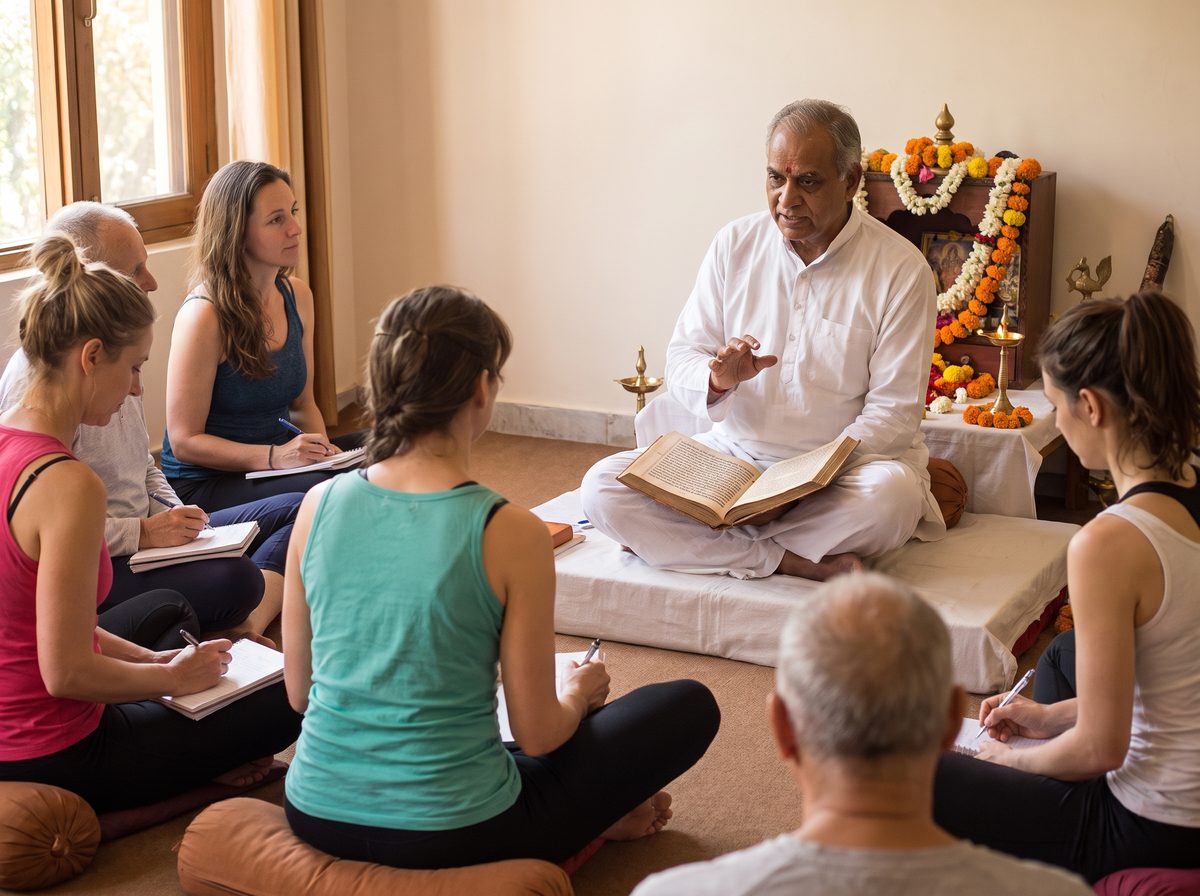
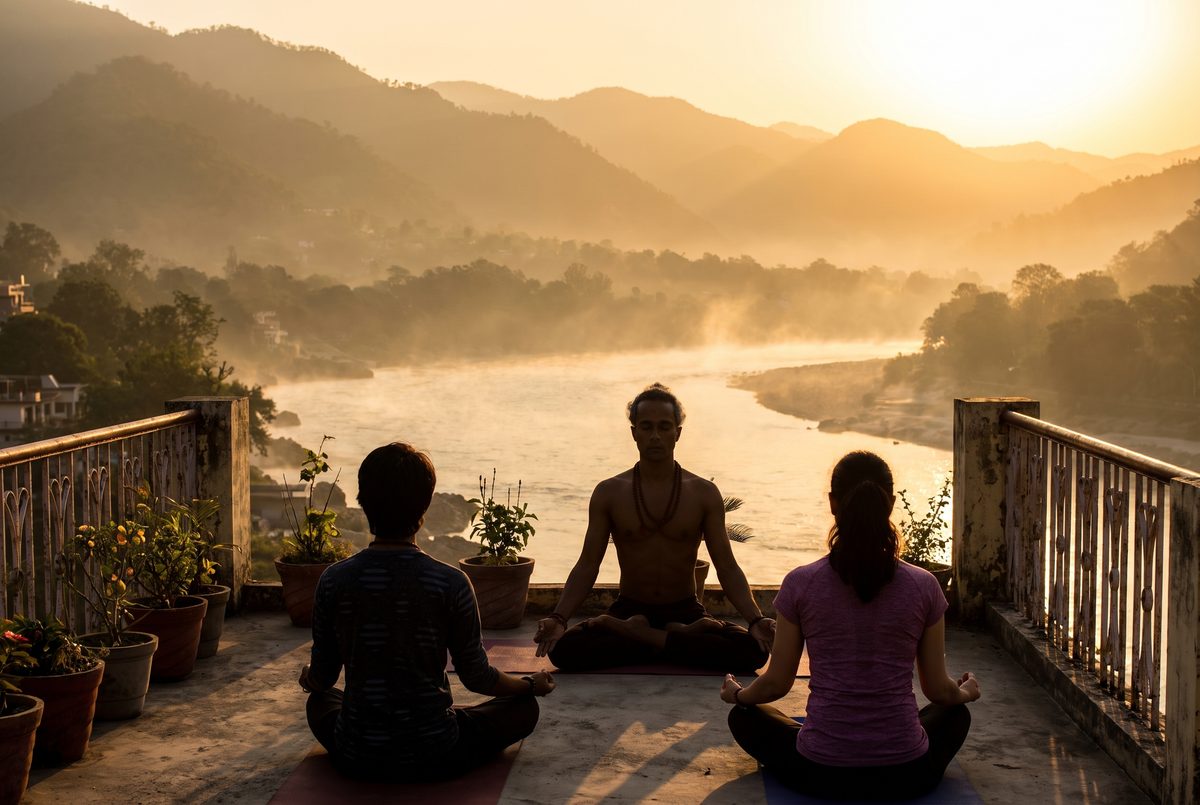

Mayuri Shewale is the heart and soul of Swaastik Yog School, bringing over 15 years of dedicated teaching experience to every class. As the founder and lead teacher, she has guided thousands of students from around the world through transformative yoga journeys that extend far beyond the mat.
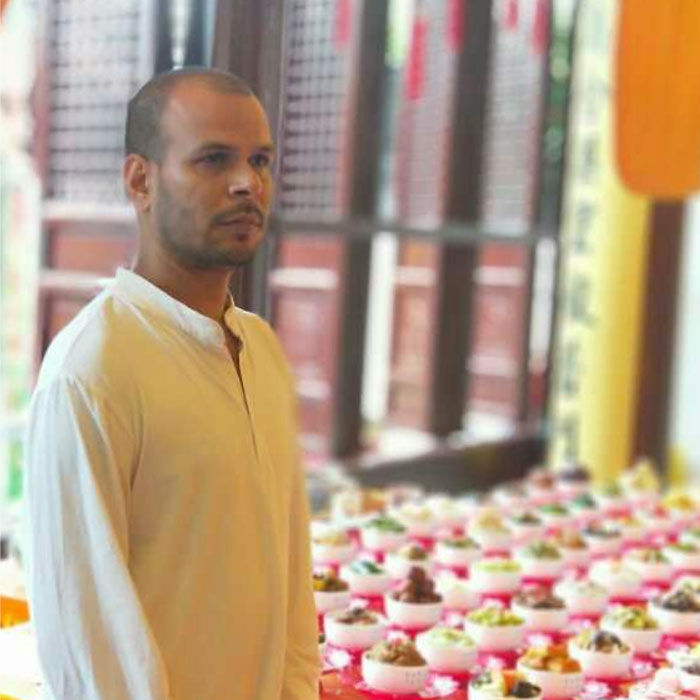
Rahul Badoni brings a rich understanding of yoga philosophy and ancient wisdom to Swaastik Yog School. With over 12 years of dedicated practice and teaching, Rahul specializes in the philosophical and spiritual dimensions of yoga, helping students understand not just the physical practice, but the deeper purpose behind it.
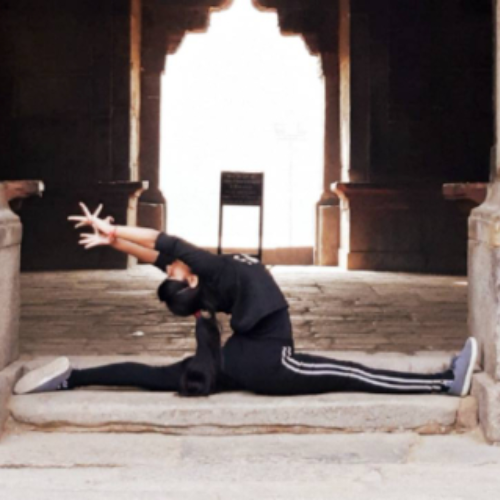
Priya Sharma is our resident aerial yoga specialist, bringing creativity, playfulness, and expert technique to the practice of yoga in hammocks. With extensive training in both traditional yoga and aerial arts, Priya has developed a unique teaching style that combines strength, flexibility, grace, and fun.

Swami Anand brings over 20 years of dedicated meditation practice and teaching to Swaastik Yog School. Having spent years in ashrams and meditation centers across India, Swami Anand offers students authentic guidance in the art of meditation, pranayama (breathing techniques), and inner awareness.
See more of the food & accommodation, browse the photo gallery, or read what our graduates say — 4.9★ from 113 Google reviews.
Ask us anything about dates, fees or what to bring — we usually reply within a few hours.