The aerial yoga teacher training in Rishikesh at Rishikesh Nath Yogshala costs $195 all-inclusive in the dormitory tier, $385 for a twin-shared room and $550 for a private room. It runs 7 days, residential, starting every monday, and the certificate is from a Yoga Alliance registered school. The price covers accommodation, three sattvic meals a day, study material, weekend excursions and certification — there are no hidden charges.
The aerial yoga teacher training at Rishikesh Nath Yogshala is a single intensive week built around one specific skill: teaching yoga in a fabric hammock rather than on a mat. It is led by Priya Sharma, the school's aerial yoga specialist and an RYT 500 with Yoga Alliance, and it is deliberately narrow in scope. This is not a general teacher training with a hammock bolted onto it. It exists because aerial yoga asks for a different vocabulary than floor-based practice, rigging, weight distribution, spotting, and a genuinely different set of contraindications, and a serious teacher needs to learn that vocabulary properly rather than pick it up by trial and error in front of a paying class.
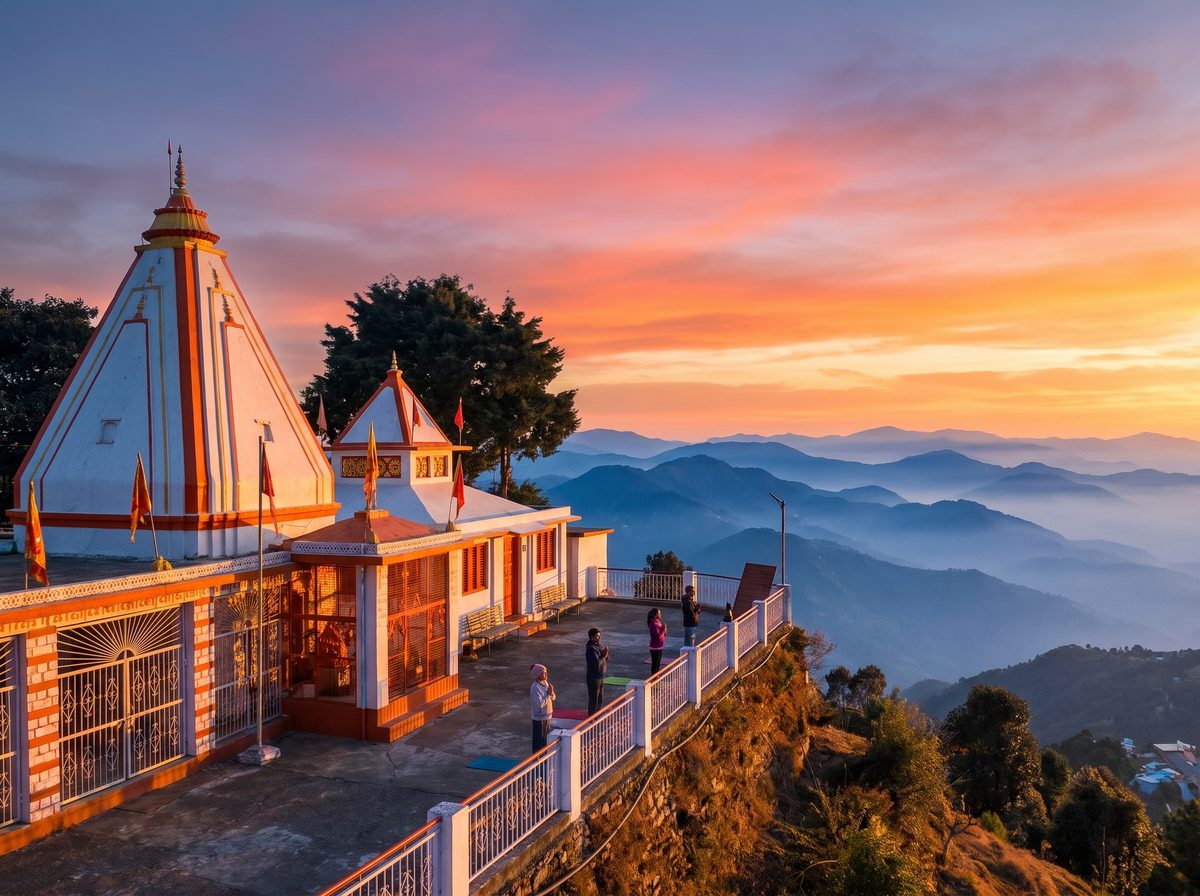
The training runs at the same school on the northern edge of Laxman Jhula, on the bank of the Ganga, and draws on the same Nath lineage roots that shape everything else taught here, though the aerial curriculum itself is a modern specialisation rather than a classical one. What it shares with the school's longer trainings is the same standard of care: nothing improvised, nothing taught without first covering how to keep a student safe in a hammock several feet off the ground.
The same honest-pricing approach applies here as it does everywhere else at the school: one number, quoted before you book, with nothing added once you have arrived. You should not have to break the bank to add a genuine specialisation to your teaching. What the course fee covers is set out in full below.
Here is exactly what is included in the aerial yoga course fee, item by item, so there is nothing left to guess at once you have arrived.
| Included in the course fee | Not included in the course fee |
|---|---|
| Free pickup from Dehradun (DED) airport on arrival | SIM card, phone data or personal calls |
| Shared or private accommodation for the full stay | Visa costs and any visa service fees |
| Three sattvic meals a day, plus herbal tea | Flights to and from India |
| Filtered drinking water throughout your stay | Travel insurance |
| Course manual and printed study materials | Extra nights before the course starts or after it ends |
| Full use of hammocks and rigging equipment during training hours | Optional excursions outside the included itinerary |
| A guided visit to the Ganga aarti | Additional spa or wellness treatments |
| Wifi and laundry access | Postage for a physical copy of your certificate |
| Your aerial yoga specialisation certificate on completion | |
Free pickup from Dehradun airport is included with every residential course on arrival; ask the school about return drop-off when you book.
The fee is one number, quoted before you book, and it does not change once you are here. There is no separate charge to actually use the hammocks during training, and no line item that only appears once you have arrived with nowhere else to stay. You should not have to break the bank to add a real specialisation to your teaching, and you should not have to negotiate to find out what you are actually paying for. The exact fee, along with the next available start date, is shown further down this page.
A single intensive week is not long, and the curriculum is built to respect that rather than pretend otherwise. It does not attempt to teach general yoga teaching skills from scratch; it assumes you already have them and spends its time entirely on what is specific to teaching in the air. What follows is what each part of the training covers.
How aerial hammocks are actually rigged, inspected and load-tested before a class ever begins, and the safety checks a responsible aerial teacher runs every single session, not just on the first day of ownership. This is the module the rest of the training sits on top of, and it is where the week starts.
Entering and exiting inversions safely, understanding what happens to the spine when it is gently decompressed in a hammock, and how to guide a student into that sensation gradually rather than dropping them into it, which is where most aerial injuries actually happen.
The hammock is not only a tool for inversions; it is also one of the gentlest restorative props available, supporting a student's full weight so muscles can properly release. This module covers cocoon-style restorative postures and how to hold a slow, quiet aerial class as competently as an active one.
How to build a class that moves logically between floor work, supported postures and hammock-based postures, with a warm-up that actually prepares the body for suspension and a cool-down that brings students back to the ground gradually rather than abruptly.
How to screen a new student before you ever put them in a hammock: the questions to ask, the conditions that rule someone out of a class entirely, and the ones that simply call for a modification. This module connects directly to the exclusion list set out later on this page, and it is treated as core material, not an afterthought.
Supervised teaching practice in the hammock, with feedback each session, so the first aerial class you lead after this week is not also the first time anyone has watched you teach one.
The aerial curriculum is taught by Priya Sharma. Meet the full teaching team, including Mayuri Shewale and Rahul Badoni, on the teachers page.
Training days follow a simple rhythm built around a single daily aerial session rather than the multiple practice blocks of the school's longer residencies, because a week is short and the priority is depth in one skill rather than breadth across many. Sunday stays the day off, the same as every other course at the school.
| Time | Session |
|---|---|
| 07:00 | Wake up |
| 07:30 | Herbal tea |
| 08:00 | Floor warm-up and mobility |
| 09:00 | Breakfast |
| 10:30 | Aerial technique: rigging, inversions or restorative work, rotating through the week |
| 13:00 | Lunch |
| 15:00 | Sequencing and contraindications lecture |
| 16:30 | Supervised teaching practicum |
| 18:00 | Meditation |
| 19:30 | Dinner |
Sound healing is part of the shared rhythm at Rishikesh Nath Yogshala, not something reserved for the school's longer teacher trainings. A session with singing bowls is folded into the aerial week at no extra cost, and it is worth experiencing after a day of inversions and restorative work in particular, since the two forms of stillness complement each other more than you might expect.
For students who want to go further with sound as its own specialisation, the school runs a separate sound healing program structured across three progressive levels. You do not need to book that program to take part in the sound healing session included in this course.
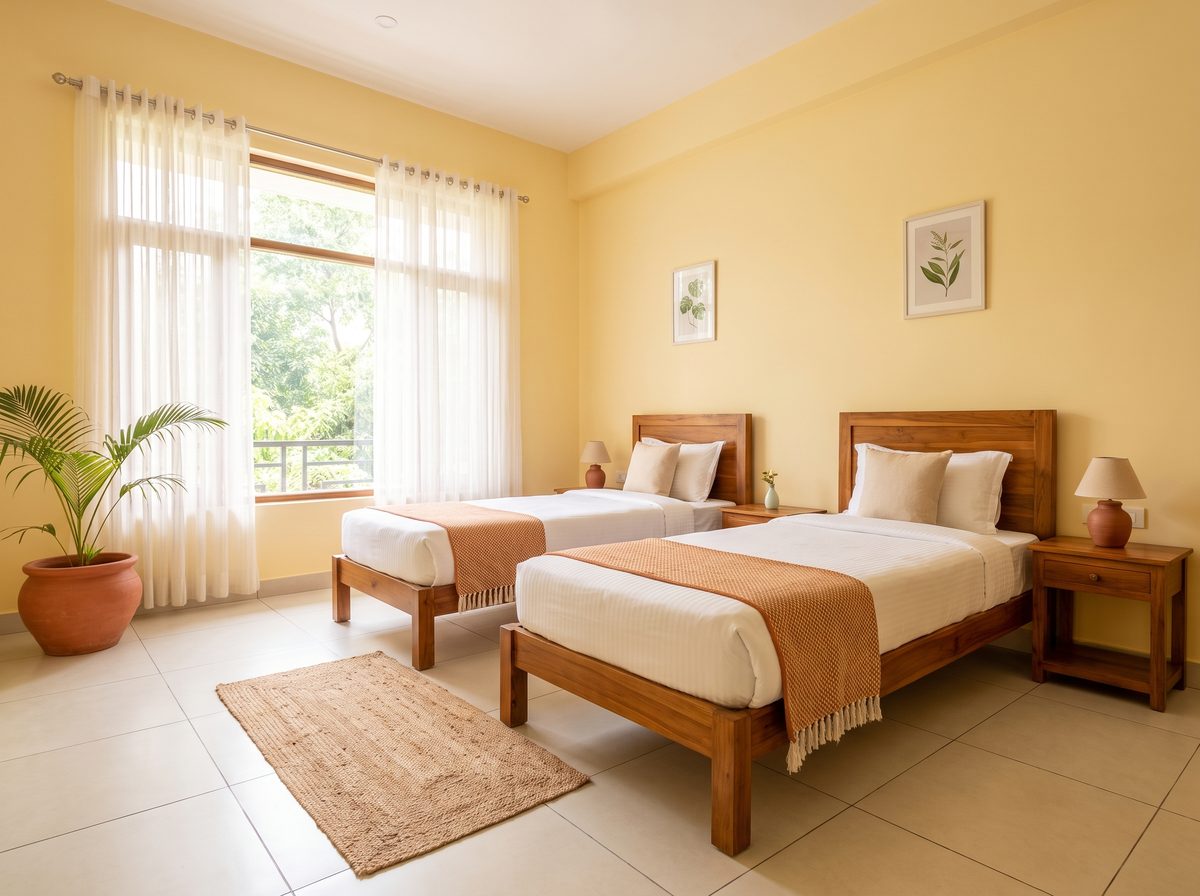
Accommodation is on-site, in separate dormitories for men and women, priced exactly the same regardless of which one you are staying in. Rooms are simple and clean, sized for a short residential stay. Full room layouts, including bathroom arrangements, are shown on the food and accommodation page. Wifi covers the school, and laundry access is available on-site.
Food is three sattvic meals a day, vegetarian, prepared in the school's own kitchen, with herbal tea between meals and filtered drinking water available at all times. Sattvic food, in the yogic sense, means simple, fresh and easy to digest, which suits a week that puts real demand on the core and shoulders in ways floor-based practice does not. If you have a genuine allergy or dietary restriction, raise it with the school before you arrive so the kitchen can plan around it.
A full walkthrough of the rooms, the kitchen and what a typical day of meals looks like, with photos, is on the food and accommodation page.
Completing the training earns you a specialisation certificate from Rishikesh Nath Yogshala confirming you have completed the aerial yoga teacher training, covering rigging and safety, inversions, restorative aerial, sequencing and contraindications. It is worth being precise about what this certificate is. It is a specialisation credential, not a standalone Yoga Alliance registered teacher training in its own right, and there is no separate Yoga Alliance registration category for aerial yoga the way there is for a 200 hour or 300 hour training. What you leave with is a genuine, focused qualification to teach aerial classes safely, layered on top of whatever general teaching credential you already hold or go on to earn.
In practice, yes, and the school is upfront about that rather than selling this course to anyone who books it. Aerial yoga teacher training is a specialisation. It teaches you how to bring an existing set of teaching skills, cueing, class management, reading a student's body, into a hammock; it does not build those skills from zero. Someone who has never taught a floor-based class before is not well served starting here, because half of what makes an aerial class safe is teaching fundamentals this week simply does not have time to cover.
The straightforward route is to complete the school's 200 hour yoga teacher training first, or an equivalent Yoga Alliance-recognised foundation elsewhere, and come to this course once you already know how to run a class on the ground. Graduates of the school's own 200 hour training arrive at this course already familiar with the teaching style and some of the same teachers, which tends to make the week move faster and more comfortably than it would for someone starting completely fresh.
This is the most important section on this page, and it is deliberately specific rather than vague. Talk to your doctor before booking if any of the following apply to you:
This is not medical advice, and it is not a complete list of every condition that might matter for your particular body. It is a starting point for a conversation with a doctor who actually knows your medical history. Inversion and suspension put real pressure on the eyes, inner ear, spine and cardiovascular system, and a hammock class is not the place to find out the hard way that one of these applies to you. If you are unsure, ask before you book, not on your first day in the studio.
This course suits a working or newly qualified yoga teacher who wants a genuine specialisation to add to what they already offer, someone who has already trained on the floor and is curious whether aerial work is something they want to bring into their own classes or studio. It is not built as a first introduction to teaching yoga, and it is not a fitness class dressed up as a teacher training; the contraindications list above is there because this is training for something with real physical stakes, not a photogenic activity to try once.
If you are still deciding whether teaching yoga is right for you at all, start with a floor-based foundation like the school's 200 hour training. If you already teach, or already hold that certification, and you want one focused week that adds a real, specific skill to your teaching, this course is built for exactly that. Studio owners often value a teacher who can offer something beyond a standard mat class, and an honest, properly taught aerial credential is a concrete way to stand out in a crowded job market without overstating what a single week can give you.
The nearest airport is Dehradun (DED), Jolly Grant Airport, which has direct flights from Delhi and a handful of other Indian cities. From Dehradun, Rishikesh is a straightforward taxi ride, and the school can help arrange transport if you share your flight details ahead of time. If you would rather travel partly by train, the nearest railhead is Haridwar, which has far better long-distance rail connections than Rishikesh itself and is a short drive from the school.
Because the course itself is only a single intensive week, losing even one day to travel delays is a much bigger fraction of your training than it would be on a longer residency. Build in a clear buffer day before the course begins rather than cutting it close. Most nationalities can apply for an Indian tourist e-visa online in advance; requirements and eligible countries change, so check the current rules for your passport before you book flights.
What to pack: comfortable, close-fitting activewear that will not catch or bunch inside hammock fabric, since loose clothing can genuinely interfere with rigging and inversions, plus the same modest layer you would bring to walk around the school and its temples, since Rishikesh is a spiritual town. A reusable water bottle and any personal medication you take round out the list, since finding a specific foreign brand locally is not guaranteed.
All classes are taught in English, including the safety briefings and contraindications lecture, so a working conversational level is assumed. Spanish-speaking support is available on request if you let the school know when you enquire or book.
Trainees come from a range of countries and backgrounds, and the school is used to hosting an international group even across a short specialisation course. If you have a specific language or communication need beyond English or Spanish, ask before you book. Given how much of this week depends on precise safety instruction, the school would rather know in advance than discover a gap once you are already in the hammock.
You need reasonable body awareness more than raw strength. The hammock supports your body weight, which means many aerial postures ask less of your arms than a comparable floor pose would. That said, this is a teacher training, not a passive class, and you should expect to be genuinely active across the week.
It is safe when it is taught properly, which is exactly why rigging, safety checks and contraindication screening are core modules in this training rather than a brief mentioned in passing. Like any practice that involves suspension and inversion, it carries real risks for certain people, which is why the exclusion list on this page exists and is treated seriously.
Talk to your doctor before booking if you have had a recent surgery, have glaucoma or another condition involving raised eye pressure, are pregnant, have uncontrolled high blood pressure, experience vertigo or another inner-ear condition, or have a recent spinal injury. This is not a complete medical list; it is a starting point for a conversation with your own doctor. The full explanation is set out earlier on this page.
Accommodation for the full stay, three sattvic meals a day plus herbal tea, filtered drinking water, your course manual, full use of hammocks and rigging equipment during training hours, a guided Ganga aarti visit, wifi, laundry access and your aerial yoga specialisation certificate. What is billed separately is listed in the table above.
In practice, yes. This is a specialisation that teaches you how to bring existing teaching skills into a hammock; it is not a first introduction to teaching yoga. The school recommends completing a 200 hour yoga teacher training, ideally its own, before taking this course.
Hammock rigging and safety, inversions and spinal decompression, restorative aerial, sequencing an aerial class, contraindications and student screening, and a supervised teaching practicum. The full module-by-module breakdown is set out earlier on this page.
The nearest airport is Dehradun (DED), Jolly Grant Airport. If you are arriving by train instead, the nearest railhead is Haridwar, which has stronger long-distance rail connections than Rishikesh itself.
No. Men and women stay in separate dormitories, and both are priced exactly the same. Nobody pays more to be housed separately.
Yes, at no extra cost. A session with singing bowls is built directly into the aerial week's schedule. The school also runs a separate, more advanced sound healing program across three progressive levels for anyone who wants to specialise further afterward.
You can book directly through the school's booking page, where the current deposit amount, payment options and next available start date are shown. If you have questions before committing, the general FAQ page and the teachers page are both good places to look, or you can reach out to the school directly.
7 days · every monday · all-inclusive of accommodation, three sattvic meals a day, study material, weekend excursions and Yoga Alliance certification.
Men and women have separate dormitories at the same price. A small deposit reserves your place; the balance is payable by PayPal or in cash on arrival.
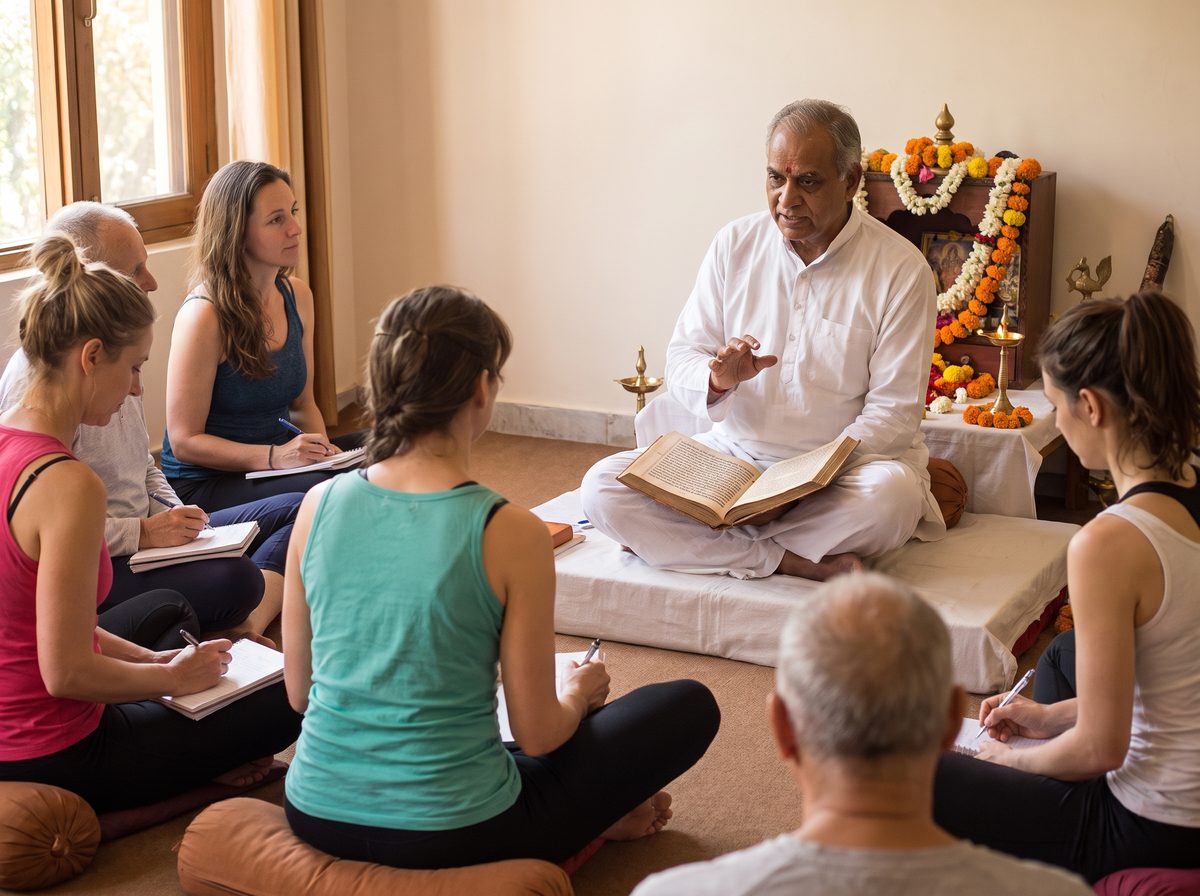
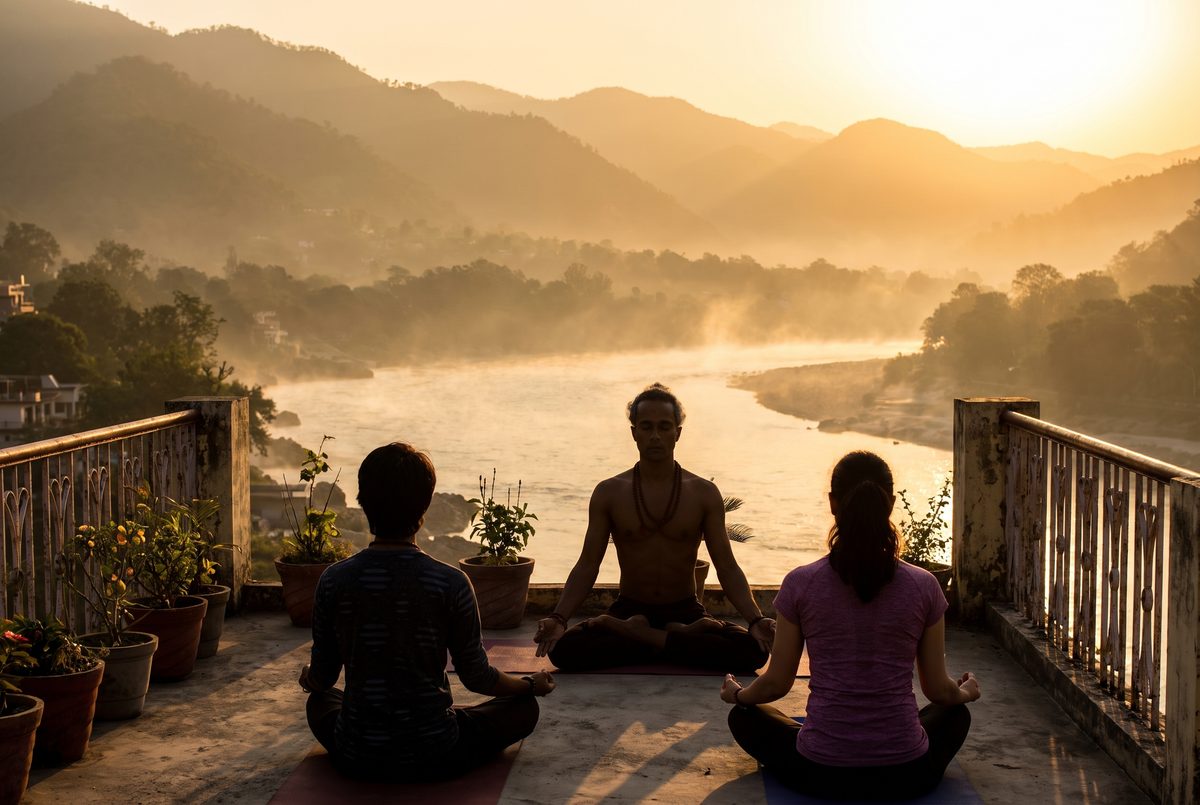

Mayuri Shewale is the heart and soul of Swaastik Yog School, bringing over 15 years of dedicated teaching experience to every class. As the founder and lead teacher, she has guided thousands of students from around the world through transformative yoga journeys that extend far beyond the mat.
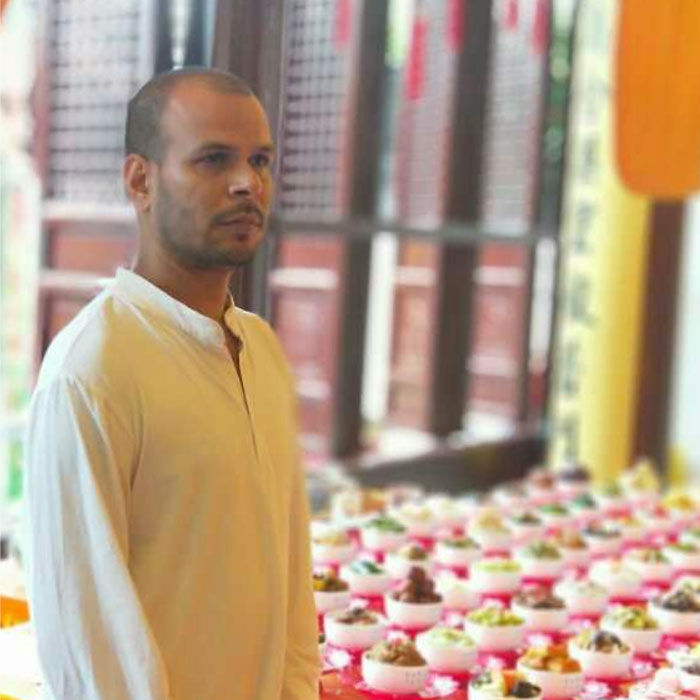
Rahul Badoni brings a rich understanding of yoga philosophy and ancient wisdom to Swaastik Yog School. With over 12 years of dedicated practice and teaching, Rahul specializes in the philosophical and spiritual dimensions of yoga, helping students understand not just the physical practice, but the deeper purpose behind it.
Priya Sharma is our resident aerial yoga specialist, bringing creativity, playfulness, and expert technique to the practice of yoga in hammocks. With extensive training in both traditional yoga and aerial arts, Priya has developed a unique teaching style that combines strength, flexibility, grace, and fun.

Swami Anand brings over 20 years of dedicated meditation practice and teaching to Swaastik Yog School. Having spent years in ashrams and meditation centers across India, Swami Anand offers students authentic guidance in the art of meditation, pranayama (breathing techniques), and inner awareness.

See more of the food & accommodation, browse the photo gallery, or read what our graduates say — 4.9★ from 113 Google reviews.
Ask us anything about dates, fees or what to bring — we usually reply within a few hours.