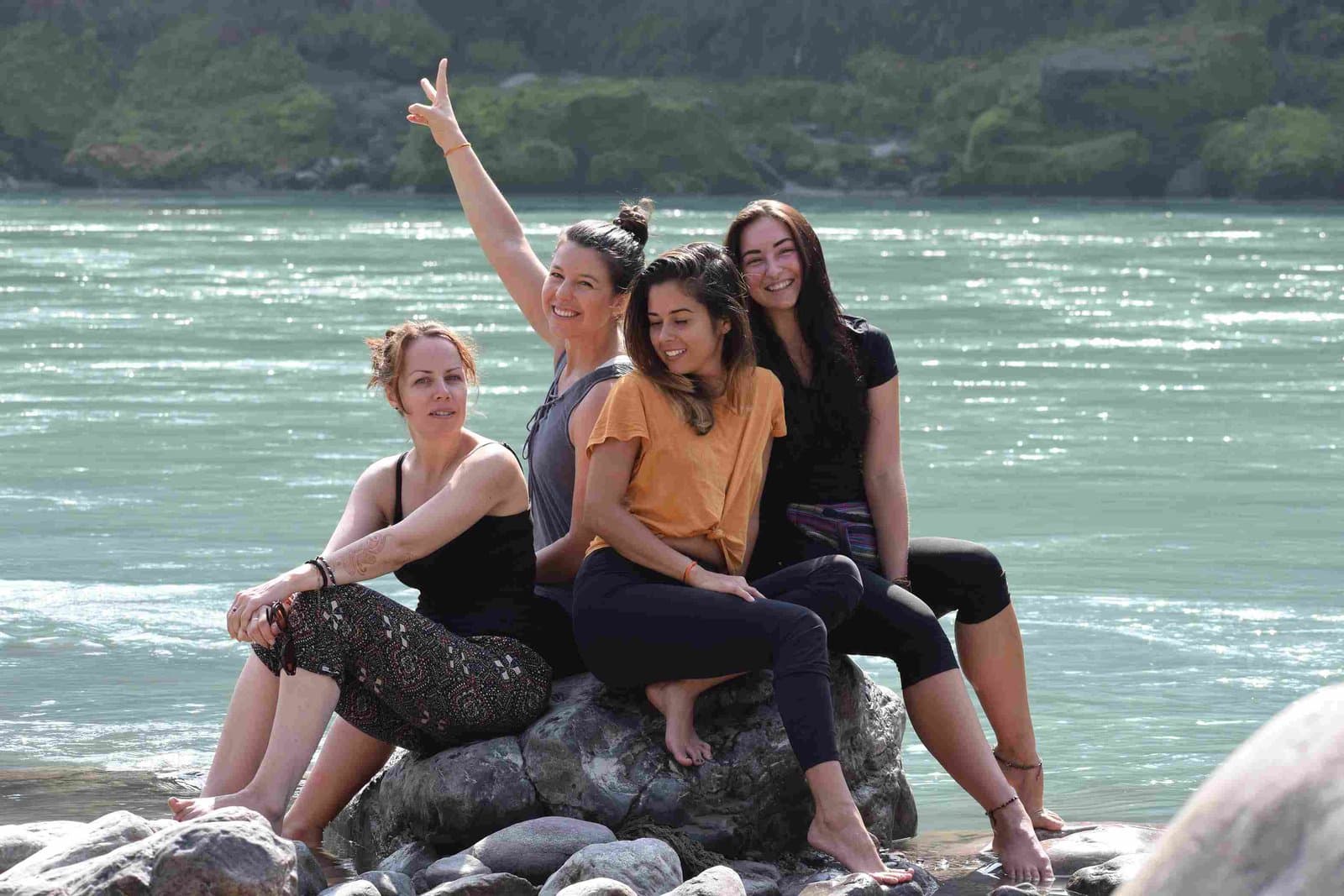
A yoga retreat at Rishikesh Nath Yogshala costs $100 for 3 days, $200 for 5 days and $250 for 7 days, all-inclusive. Retreats begin every Monday, all year round, and the price covers accommodation, three sattvic meals a day, daily yoga and meditation, and Himalayan excursions.
A yoga retreat at Rishikesh Nath Yogshala is built for people who want guided practice, real rest and the same sattvic kitchen the teacher trainees eat from, without signing up to become a teacher. You practise, you eat well, you go on a couple of excursions into the hills and along the Ganga, and you leave with your own body reset rather than a certificate. Retreats run on the same site, with the same teachers, as the school's residential teacher trainings, so the quality of instruction does not drop just because you are not here to graduate.
A retreat and a teacher training share a building, a kitchen and, often, the same teachers, but they are built for different goals. A teacher training is assessed: there is a curriculum, a practicum and a certificate at the end of it, and the pace is set by what a future teacher needs to learn. A retreat has no assessment and no certificate. Its schedule is lighter, its focus is your own practice and recovery rather than your ability to teach someone else's, and nobody is tracking your attendance against a graduation requirement. If what you actually want is a credential you can use professionally, look at the 100 hour yoga teacher training instead, it is the shortest of the school's certified courses and a realistic entry point even if you have never trained before.
What a retreat does share with the teacher trainings is the daily rhythm: an early wake-up, a morning asana and pranayama session, meals at fixed times, and an evening wind-down with meditation or yoga nidra. If you have never kept that kind of schedule before, a retreat is a gentler way to find out whether it suits you than committing to a full certification course straight away.
| Length | Daily rhythm | Excursions | Who it suits |
|---|---|---|---|
| A short break | Two yoga sessions a day plus one guided meditation, light on free time | One Himalayan foothill excursion and a Ganga aarti evening | First-timers testing whether a retreat schedule suits them, or a stopover on a wider India trip |
| A mid-length retreat | The same daily sessions with more unstructured time worked in between them | A foothill excursion, the Ganga aarti, and time to explore Laxman Jhula on foot | Returning practitioners who want a proper reset without giving up a large block of time |
| A full week | The complete daily rhythm, including a rest afternoon built into the middle of the stay | Both excursions above, plus room to add a second outing depending on the group | Anyone who wants the retreat to actually change something, not just interrupt a busy schedule for a couple of days |
The 7 day yoga retreat in Rishikesh has its own page with a week-by-week plan, the two excursions, and what the fee covers.
All three lengths eat from the same sattvic kitchen and stay in the same rooms as the school's teacher trainees; a shorter retreat is not a smaller version of the experience, it is simply less time inside it. Exact dates and current pricing for each length are shown further up this page.
Every retreat day starts early: a wake-up call, herbal tea, and a morning asana and pranayama session before breakfast. Shatkarma and mantra chanting are worked into the mornings as well, the same purification and chanting practices taught on the residential courses, just at a gentler pace and without the assessment attached. Afternoons carry a mix of yoga fundamentals, free time, and either an excursion or rest depending on the day, and evenings wind down with meditation or yoga nidra before dinner. Guests staying the full week get a built-in rest afternoon partway through, which matters more than it sounds like on paper once the early starts have added up.
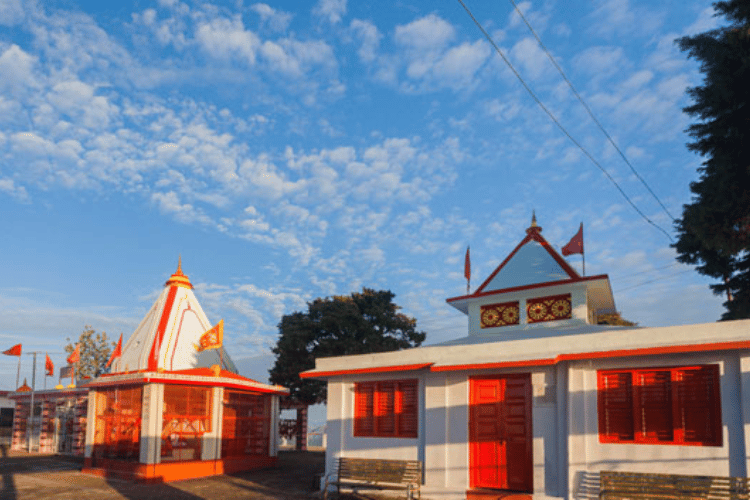
Group outdoor excursions are part of every retreat length, not an optional add-on you have to book separately. A Himalayan foothill excursion gets you out of the building and into the hills above Rishikesh, and a Ganga aarti evening takes the group down to the river for the evening lamp ceremony, one of the more atmospheric things Rishikesh does after dark. Longer retreats have room to add a second outing depending on group size and season; ask what is planned for your dates when you book.
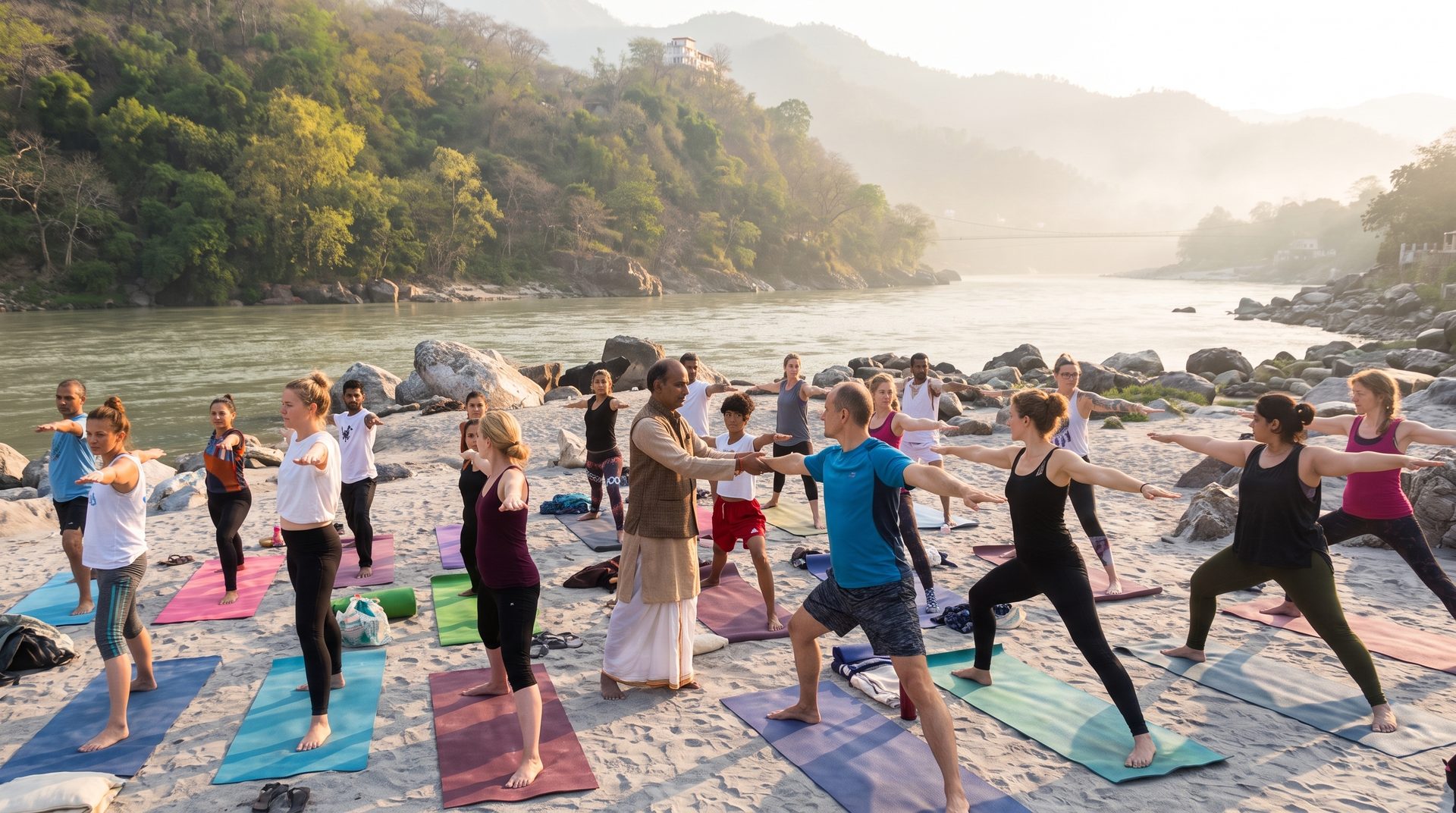
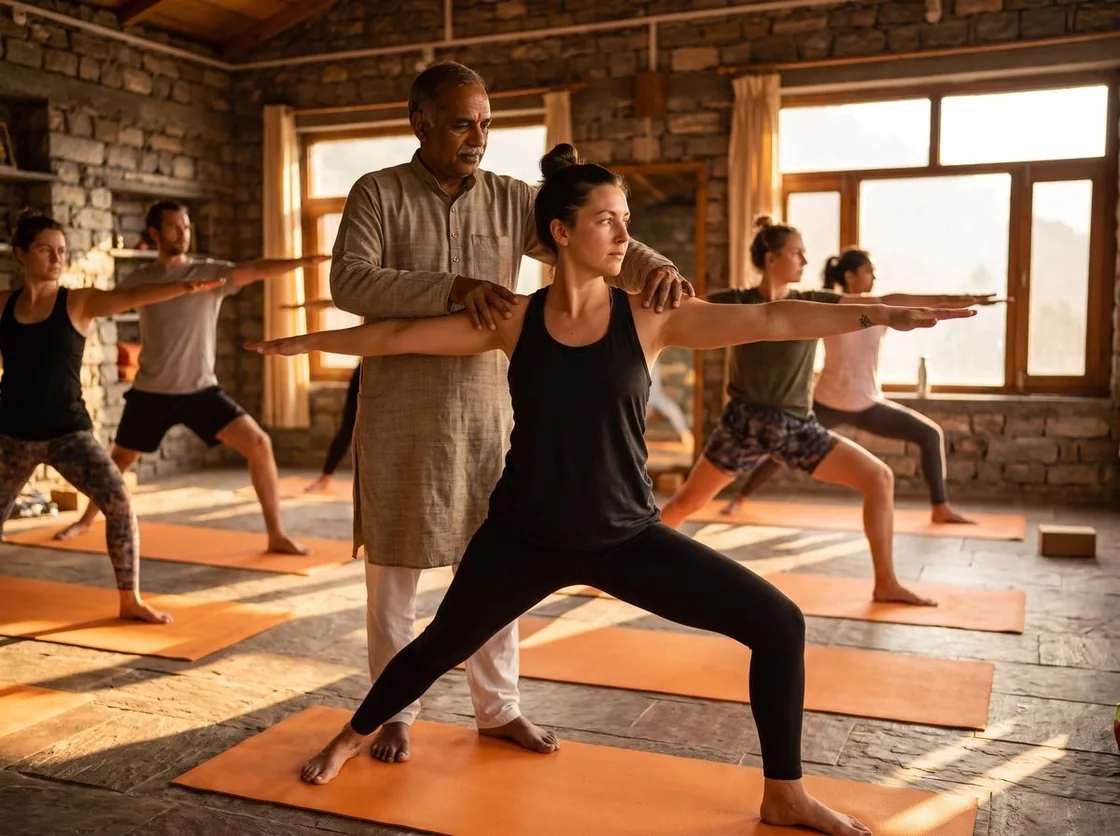
Morning asana sessions build from joint-freeing warm-ups into standing and seated postures, with alignment cues that make each pose safer to hold. This is the backbone of every retreat day, whichever length you choose.
Breathing techniques and the traditional Hatha Yoga cleansing practices known as shatkarma are worked into the morning sessions, taught with the same care given to trainees on the residential courses, just at a gentler pace.
Evenings wind down with guided meditation or yoga nidra, a deeply relaxing lying-down practice, so the day closes with stillness rather than another active session stacked on top of an already full schedule.
Short philosophy sessions connect the physical practice back to where it came from, without the depth or pace of the philosophy module inside a full teacher training, and without any assessment attached to it.
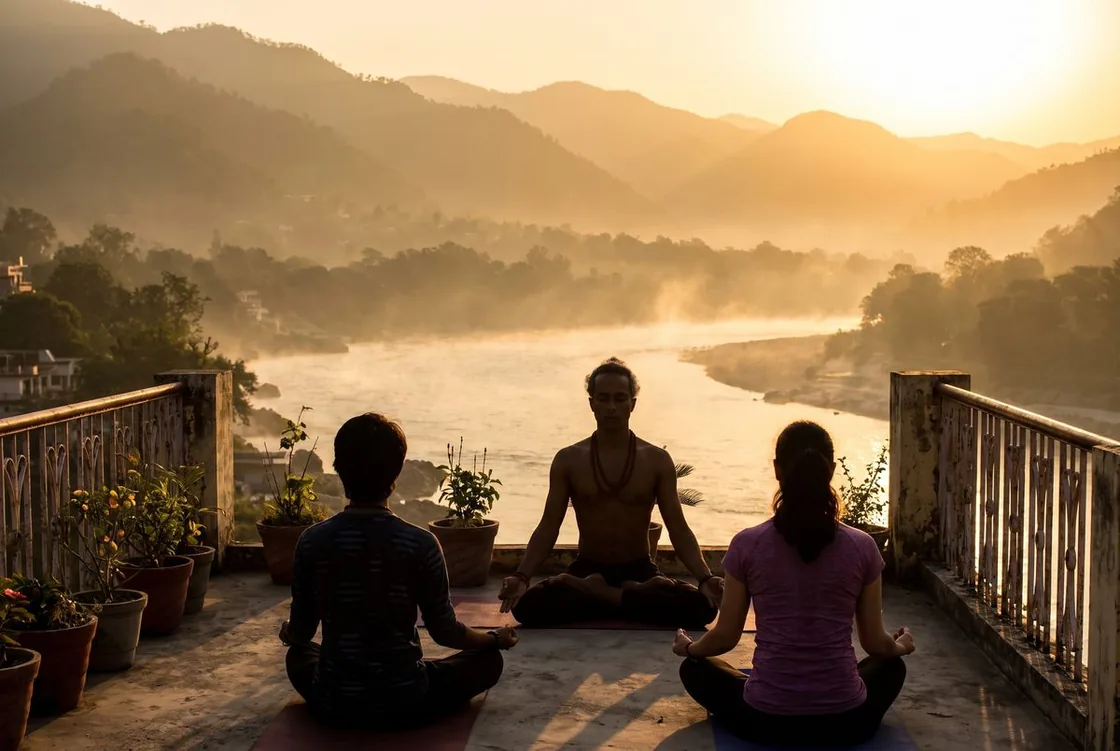
Bring comfortable, modest clothing you can move in for asana practice, since Rishikesh is a spiritual town and how you dress around the school and its temples matters more here than it might at a studio back home. A light jacket covers cooler mornings and evenings, a reusable water bottle cuts down on plastic, and any personal medication you rely on is worth packing yourself, since a specific foreign brand is not guaranteed to be available locally. A yoga mat is useful to bring if you already have one you like; check with the school ahead of arrival about what is provided.
Retreats at Rishikesh Nath Yogshala begin every Monday, all year round, rather than on a handful of fixed dates each month the way the teacher trainings do. That weekly cadence exists because a retreat does not need to synchronise a whole cohort around a curriculum the way a certification course does, so there is no reason to make you wait for a specific start date if you are ready to come sooner. It also means a retreat is easier to fit around an existing trip: if you are already travelling through northern India, you can generally build a retreat into your itinerary without reshuffling the rest of your plans around it.
Flights, visas, travel insurance and any extra stay before or after your retreat are your own arrangement, the same as for the teacher trainings. A note on pickup: free airport pickup from Dehradun is included with the school's residential teacher trainings; ask the school when you book whether the same applies to your retreat.
Retreat guests are housed in the same room tiers, and eat from the same sattvic kitchen, as everyone training to become a teacher on-site. Rooms come with attached bathrooms, hot water and somewhere to store your belongings, and meals are three vegetarian sittings a day plus herbal tea, with RO filtered drinking water available throughout your stay. The full breakdown of room tiers, a sample week of meals, and how dietary needs like vegan or gluten-free are handled is on the food and accommodation page.
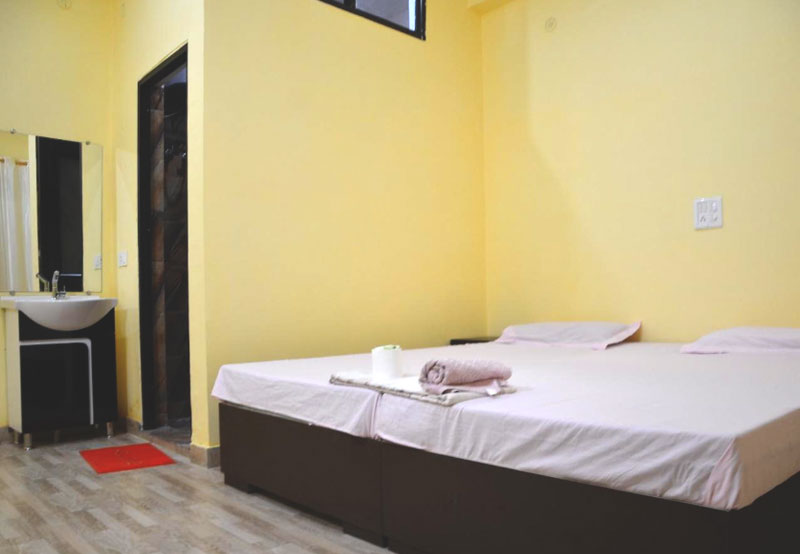
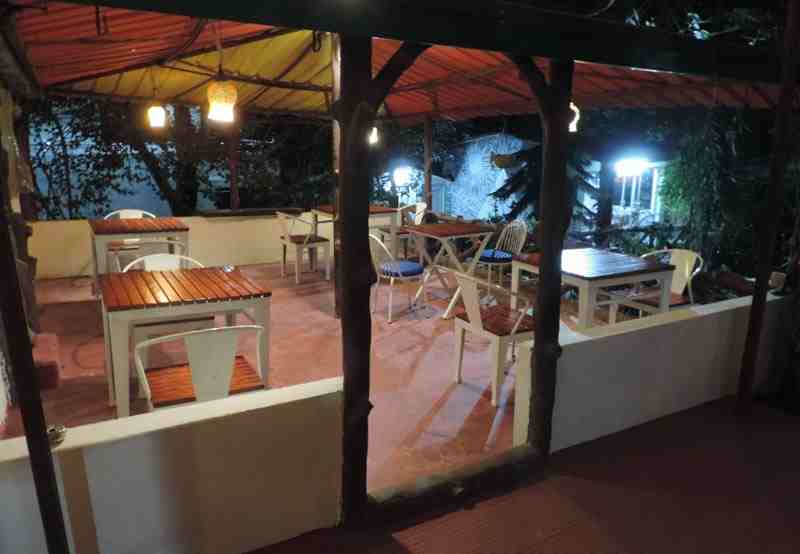
Retreat sessions are led by the same core teachers who run the school's residential teacher trainings, not a separate, less experienced retreat staff. Asana and pranayama sessions draw on the same Hatha foundation taught to trainees, and meditation sessions follow the same unhurried style used throughout the school. Meet the full teaching team, with credentials and what each one specialises in, on the teachers page.
Retreats are booked directly through the school, with current dates and pricing shown further up this page. If your plans change after you book, get in touch as early as you can, the weekly Monday start means there is usually more flexibility to shift your dates than a fixed-date teacher training would allow. Registration fees are generally not refundable outright, but the school works with guests to reschedule to a later date rather than simply losing the payment, ask about the current policy when you book.
Smoking and alcohol are not permitted on the property, in keeping with the sattvic philosophy the kitchen and the practice both run on. If you are fasting on a particular day, letting the kitchen know in advance avoids food waste and means they can plan around it properly. Guests are expected to be on time for scheduled sessions, since a late arrival to a group meditation or asana class disrupts it for everyone else in the room, not just for you.
A retreat has no curriculum to complete, no practicum and no certificate; it is guided practice, rest and good food. A teacher training is assessed and ends in a certificate you can use to teach. If you want the credential, look at the 100 hour teacher training instead.
A short break suits a first visit or a stopover on a wider trip. A mid-length retreat suits a returning practitioner who wants a proper reset without giving up a large block of time. A full week suits anyone who wants the retreat to actually change something rather than just interrupt a busy schedule.
Yes. Every retreat length includes at least a Himalayan foothill excursion and a Ganga aarti evening, with room to add a second outing on longer stays depending on the group and season.
Because a retreat does not need to synchronise a group around a shared curriculum the way a teacher training does, so there is no reason to make you wait for a specific monthly date. It also makes a retreat easier to slot into an existing trip through northern India.
Yes, retreat guests eat the same sattvic, vegetarian menu, cooked in the same kitchen, as everyone on a residential teacher training course.
Extra nights before or after your retreat are not included in the standard package but can usually be arranged, ask when you book so the school can confirm room availability for your exact dates.
Retreats begin every Monday, all year round · all-inclusive of stay, three meals a day and excursions.
| Retreat | Price |
|---|---|
| Retreat3 Day Yoga Retreat | Price$100 |
| Retreat5 Day Yoga Retreat | Price$200 |
| Retreat7 Day Yoga Retreat | Price$250 |
Where retreat days lead outside the shala, filmed by our students and teachers.
Founder & Lead Yoga Teacher
Mayuri Shewale is the heart and soul of Rishikesh Nath Yogshala, bringing over 15 years of dedicated teaching experience to every class. As the founder and lead teacher, she has guided thousands of students from around the world through transformative yoga journeys that extend far beyond the mat.
Co-Founder & Philosophy Teacher
Rahul Badoni brings a rich understanding of yoga philosophy and ancient wisdom to Rishikesh Nath Yogshala. With over 12 years of dedicated practice and teaching, Rahul specializes in the philosophical and spiritual dimensions of yoga, helping students understand not just the physical practice, but the deeper purpose behind it.
Aerial Yoga Specialist
Priya Sharma is our resident aerial yoga specialist, bringing creativity, playfulness, and expert technique to the practice of yoga in hammocks. With extensive training in both traditional yoga and aerial arts, Priya has developed a unique teaching style that combines strength, flexibility, grace, and fun.
Meditation Master
Swami Anand brings over 20 years of dedicated meditation practice and teaching to Rishikesh Nath Yogshala. Having spent years in ashrams and meditation centers across India, Swami Anand offers students authentic guidance in the art of meditation, pranayama (breathing techniques), and inner awareness.
See more of the food & accommodation, browse the photo gallery, or read what our graduates say — 4.9★ from 113 Google reviews.
Ask us anything about dates, fees or what to bring — we usually reply within a few hours.
