
Hatha vs Ashtanga vs Vinyasa: Which Should You Learn?
Updated
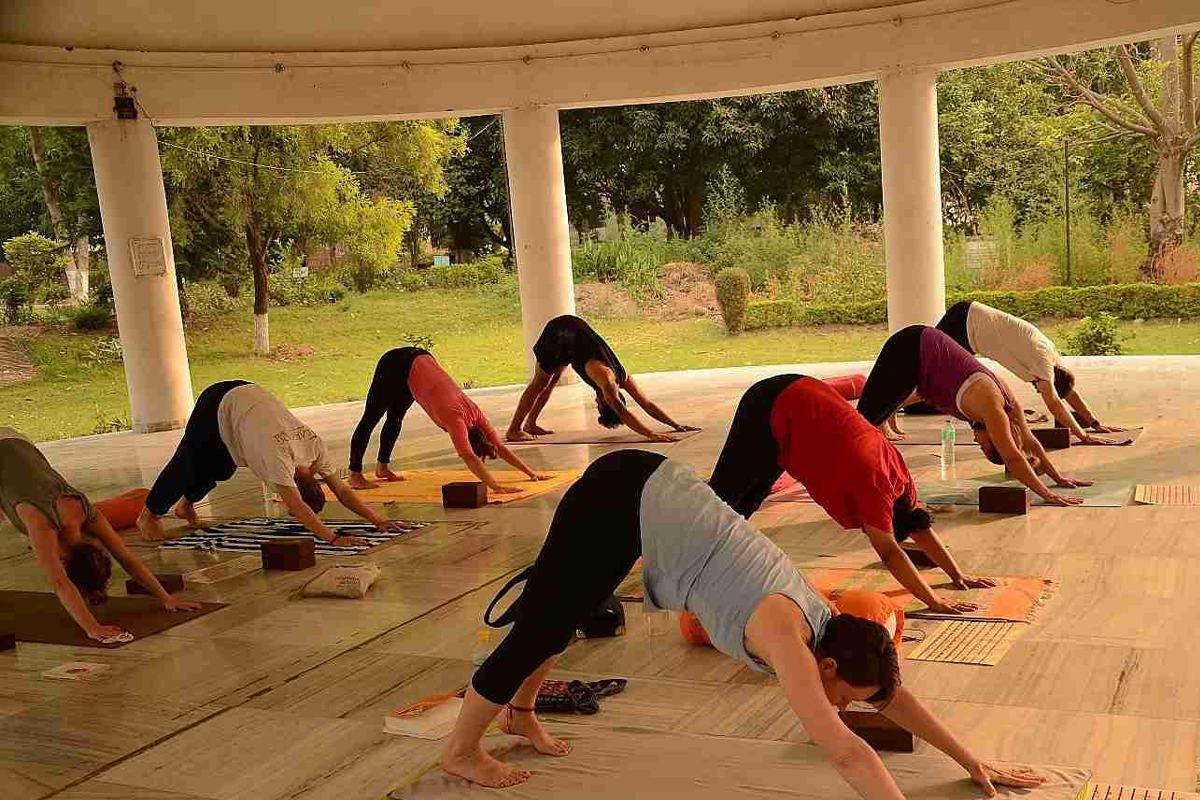
What is the difference between Hatha, Ashtanga and Vinyasa yoga?
The difference is pace and structure. Hatha holds each posture for several breaths. Ashtanga follows a fixed series in the same order every time. Vinyasa links postures into a flow that changes from class to class, one breath per movement. The postures are largely the same in all three.
- Slowest
- Hatha
- Fixed sequence
- Ashtanga
- Most variety
- Vinyasa
- Best first style
- Hatha
- All three in one course
- Our 200 hour course: 22 days, from $440
We teach all three styles at Rishikesh Nath Yogshala, with the same teachers for each. This guide sets them side by side, then says which to learn first and which to train in.
Hatha vs Ashtanga vs Vinyasa at a Glance
Hatha is slow and steady, Ashtanga is fixed and vigorous, and Vinyasa flows and changes every class.
| Feature | Hatha | Ashtanga | Vinyasa |
|---|---|---|---|
| Pace | Slow, postures held 5 to 10 breaths | Fast, vigorous | Flowing, one breath per movement |
| Sequence | Set by the teacher, changes by class | Fixed series, same every time | Creative, changes every class |
| Breath | Pranayama practised on its own | Ujjayi with bandhas and drishti | Ujjayi breath links the movement |
| Best for | Beginners, stress relief, learning alignment | Discipline, strength, a daily routine | Fitness, variety, creative flow |
| Sweat level | Low to moderate | High | Moderate to high |
Most styles taught today grew out of Hatha yoga, which is why the same postures turn up in all three.
Hatha Yoga: Slow Holds and Alignment
Each posture is held for several breaths, with pauses between, so you have time to learn it.
- What a class is like: basic postures, breathing and steady holds, at a slow to moderate pace.
- The breath: pranayama is taught as a separate practice, not only as a link between movements.
- Its six parts: asana, pranayama, shatkarma (cleansing practices), mudra, bandha and dhyana (meditation).
- Who it suits: beginners, and anyone who wants to learn alignment before speed.
- On our courses: Hatha is the foundation. You spend more time in Hatha classes than in any other single style.
Hatha gives you the cueing language you reuse in every other style: how to bring a student into a pose, read whether their alignment is safe, and bring them out again. Our post on what Hatha yoga is goes into its history and benefits.
Ashtanga Yoga: One Fixed Series
A set series of postures, practised in the same order every time, with a vinyasa count linking them.
- What a class is like: fast and vigorous, and physically demanding.
- The primary series: a standing sequence, the seated postures that follow it, and a finishing sequence.
- The breath: ujjayi breath, with bandhas and drishti.
- Who it suits: people who want discipline, strength and a routine they can measure progress against.
- On our courses: the 200 hour course works through the primary series, at a pace that matches the group.
A set sequence practised daily is a different teaching tool from an improvised class. You practise it enough times to feel its internal logic.
Vinyasa Yoga: A Flow You Build Yourself
Postures linked into a continuous flow, one movement per breath, in a sequence the teacher designs.
- What a class is like: moderate to fast, warmer and more cardio-like than Hatha.
- The sequence: Ashtanga hands you a fixed sequence. Vinyasa hands you a set of principles for building your own.
- The shape of a class: it builds heat and intensity, then brings it back down before savasana.
- Who it suits: people who want fitness and variety.
- On our courses: you learn to sequence toward a peak posture, so a class never feels like a random string of poses.
This is the most useful style to study if you plan to teach flow classes in a studio.
Which Style Should You Learn First?
Start with Hatha. Try a gentle Vinyasa class next, and leave the full Ashtanga series until later.
| Your goal | Start with |
|---|---|
| You are a complete beginner | Hatha. Slow holds give you time to learn the shapes and the breath |
| Fitness and sweat | Vinyasa or Ashtanga. Both build stamina and strength |
| A fixed routine you can measure progress against | Ashtanga |
| Variety from class to class | Vinyasa |
| Stress relief and a calmer practice | Hatha, with longer pranayama |
Yoga is generally safe. If you are pregnant, recovering from surgery or an injury, or have high blood pressure, glaucoma or a heart condition, speak to your doctor and tell your teacher before you start.
New to all of it? Our guide on how to start yoga as a beginner covers the first steps.
Which Style Should a Teacher Train In?
More than one. A multi style foundation is what most studios hire for.
| Style | 100 hour course | 200 hour course |
|---|---|---|
| Hatha | Where the course begins, and where most of the mat time goes | The foundation: postures, alignment and the cueing language behind every other style |
| Ashtanga | The opening standing sequence and the vinyasa count, at a beginner's pace | The primary series, until its sequence makes sense in the body |
| Vinyasa | An introduction: linking breath to movement | Building your own flow class toward a peak posture |
| Also taught | Pranayama, philosophy, anatomy and teaching practice | Iyengar-influenced alignment with props, and Yin and restorative |
A graduate of the 200 hour course can walk into a general studio class, a gentle beginners' class or a faster flow class and teach all three.
- The 200 hour yoga teacher training in Rishikesh runs 22 days, from $440 in a dormitory.
- The 100 hour yoga teacher training in Rishikesh is the foundation course: 14 days, from $275.
- Every course and room is on our yoga teacher training fees in Rishikesh page.
To see where each style sits in the day, read a day in our 200 hour yoga teacher training schedule.
Frequently Asked Questions
Is Hatha or Vinyasa better for beginners?
Hatha. Postures are held slowly, with attention to breath and alignment, so you have time to learn them. Once the basics feel comfortable, try a gentle Vinyasa class for flow.
Is Ashtanga harder than Vinyasa?
Usually, yes. Ashtanga is fast and vigorous, and follows a fixed, physically demanding series in the same order every time. A Vinyasa class can be gentle or strong, because the teacher designs the sequence.
Is Vinyasa the same as Ashtanga?
No. Both link breath to movement, but Ashtanga repeats one fixed series and Vinyasa changes its sequence from class to class. Ashtanga gives you a set sequence. Vinyasa gives you principles for building your own.
Can I learn Hatha, Ashtanga and Vinyasa in one teacher training?
Yes. Our 200 hour course is multistyle: in 22 days you practise and learn to teach Hatha, Ashtanga, Vinyasa, Iyengar-influenced alignment, and Yin and restorative yoga, with the same teaching team for every style.
Do I need to choose one style before a teacher training?
No. On a multistyle course you compare the styles in your own body, with the same teachers, before you choose one to go deeper into.
Ready to begin?
Ask us anything about dates, fees or what to bring — we usually reply within a few hours.