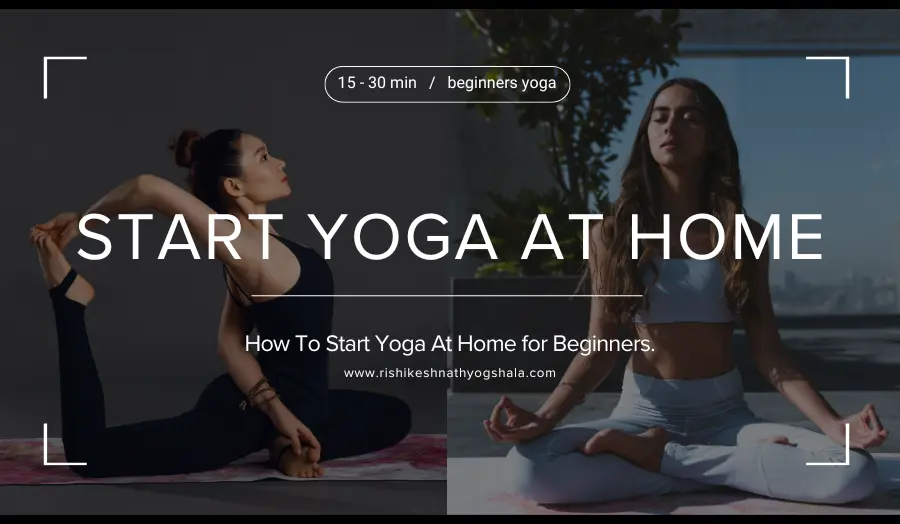
Start yoga at home in five steps: (1) clear a quiet spot with a mat or folded blanket; (2) fix a time you can keep, ideally morning on an empty stomach; (3) follow a 15-minute beginner sequence of simple poses such as Tadasana, Balasana, Adho Mukha Svanasana, Bhujangasana and Paschimottanasana, holding each for 15-30 seconds; (4) breathe slowly through the nose, never straining; (5) practise five days a week and end every session with Savasana. You can learn the basics alone; a teacher matters once you want correct alignment.
Yoga is one of the best practices to improve flexibility, strength and mental well-being. If you're new to yoga and wondering how to start yoga at home, this guide will help you take the first step with confidence. Whether you want to boost fitness, reduce stress or simply add mindfulness to your routine, starting yoga at home is easy and beneficial.
Before the ten steps below, here is the routine we recommend to complete beginners. Do it in this order, breathing slowly through the nose, and it takes about 15 minutes including the pauses between poses.
| Pose | Breaths or time | Purpose |
|---|---|---|
| Belly breathing, seated | 2 minutes | Settles the mind, warms up the breath |
| Mountain Pose (Tadasana) | 5 breaths | Posture and balance |
| Cat-Cow (Marjaryasana-Bitilasana) | 8 rounds | Warms up the spine |
| Downward Dog (Adho Mukha Svanasana) | 5 breaths, twice | Arms, legs and core |
| Cobra Pose (Bhujangasana) | 5 breaths, twice | Opens the chest, strengthens the spine |
| Child's Pose (Balasana) | 1 minute | Rests the back, relieves stress |
| Seated Forward Bend (Paschimottanasana) | 5 breaths | Hamstrings and lower back |
| Alternate Nostril Breathing (Nadi Shodhana) | 2 minutes | Balances and calms |
| Savasana (Corpse Pose) | 3 minutes | Absorbs the practice |
If counting breaths feels awkward, simply hold each pose for 15-30 seconds. Skip anything that hurts; the sequence works just as well with seven poses as with nine.
Yes, up to a point. The basics of a home practice (simple standing and seated poses, slow nasal breathing and Savasana) can be learnt alone with a good beginner book, video or app, and a great many people start exactly this way. What is hard to learn alone is alignment: whether your knee is tracking over your foot, whether you are rounding the lower back in a forward bend, or whether you are holding your breath. Those habits are invisible to you and easy for a teacher to spot in the first class.
The best way to learn yoga at home, in our experience with beginners, is a mix: practise the short sequence above on your own most days, and get live feedback from a teacher at least once a week. That can be a local class, a live online session or, if you want a proper foundation in two weeks, the 100 Hour Yoga Teacher Training in Rishikesh, a 14-day foundation course with accommodation and two sattvic meals a day included, priced from $275.
The first step in how to start yoga at home is creating a peaceful and clutter-free space. Choose a quiet area with enough room to move freely. A yoga mat is essential, but if you don't have one, a non-slippery surface works too. Keep your space clean and ensure proper ventilation.
Yoga can be practised at any time of the day, but morning is often the best as it energises your body for the day ahead. If mornings are not suitable, find a time when you can practise consistently without distractions. Whatever the hour, keep the stomach light: wait two to three hours after a full meal.
As a beginner, start with basic yoga poses that help build flexibility and strength. Here are some easy poses to begin with:
Practise each pose for 15-30 seconds and focus on your breathing.
Breathing plays a crucial role in yoga. Practising deep breathing helps calm the mind and enhances focus. Try these simple pranayama techniques:
Keep every breath slow and through the nose, and never strain. Two to three minutes of belly breathing before the poses and two minutes of Nadi Shodhana after them is plenty in the first month.
If you're unsure how to start yoga on your own, follow beginner-friendly online classes on YouTube or use yoga apps like Yoga for Beginners, Daily Yoga or Down Dog. These guided sessions will help you practise correctly and stay motivated.
Pre-recorded videos cannot see you, though. If you want a teacher who watches your alignment and answers your questions, our online yoga teacher training runs live on Zoom with recordings to review later, starts any month, and the 100 hour level costs $160. It suits you just as well if you simply want a correct home practice and have no plan to teach.
Consistency is key to making yoga a habit. Start with 10-15 minutes a day and gradually increase the duration. Set a reminder or add yoga to your daily schedule to maintain regularity.
If you find it hard to build the habit alone, a short immersion can kick-start it. A yoga retreat in Rishikesh with daily yoga, meditation and sattvic meals starts every Monday, from $100 for three days, and you return home with a routine already in place.
Never push your body beyond its limits. If you feel pain or discomfort, ease out of the pose. Yoga is about progress, not perfection. Focus on gradual improvement rather than forcing yourself into advanced postures.
Hydration and nutrition play a vital role in your yoga journey. Drink plenty of water and eat a balanced diet rich in fruits, vegetables and proteins to support your practice.
Every yoga session should end with Savasana (Corpse Pose). This helps relax the body and absorb the benefits of your practice. Simply lie on your back, close your eyes and breathe deeply for a few minutes.
Take note of how your body and mind feel after each session. Keep a yoga journal or use an app to track your progress. The key is to enjoy the journey and embrace the process.
Yoga at home is generally safe for healthy adults, but a few groups should take advice first. If you are pregnant, have high blood pressure, glaucoma, a slipped disc, a recent surgery or an injury, check with a doctor and avoid poses that bring pressure to the head (such as a long Downward Dog) or deep forward bends until you are cleared. Practise on an empty stomach, never bounce in a stretch, and if a pose causes sharp pain, dizziness or numbness, come out of it and rest.
If you searched "yoga shuru kaise kare", here is the short version in simple English:
Now that you know how to start yoga at home, take the first step today. Yoga is not about perfection but about connecting with your body and mind. Start slow, stay consistent and enjoy the transformation.
If you want to start yoga at home as a beginner, you can join our 100 Hour or 200 Hour Online Yoga Teacher Training Course, which will help you start the right way with live guidance from our teachers.
Yes, you can start yoga at home even if you have no experience. Begin with basic poses such as Tadasana, Balasana and Bhujangasana, follow beginner tutorials or a live online class, keep the first sessions to 10-15 minutes and listen to your body. Leave advanced poses like headstand until a teacher has checked your form.
A yoga mat is essential, but you can also use a towel or a thick carpet for the first few weeks. Comfortable clothing and a peaceful, ventilated space are also recommended. Optional extras that help beginners are two yoga blocks (or thick books), a strap (or a belt) and a folded blanket to sit on.
Start with 10-15 minutes a day and gradually increase the duration as your flexibility and strength improve. Five short sessions a week are better than one long session on a Sunday. Once 15 minutes feels easy, add five minutes each week until you reach 30-45 minutes.
Yes, yoga can help with weight loss, especially when combined with a balanced diet and regular practice. Dynamic styles like Vinyasa and Power Yoga generally use more energy than gentle Hatha, and the calmer mind and better sleep that often come with regular practice may reduce stress eating. Treat it as one part of a healthy routine, not a quick fix.
While not mandatory, following an online instructor or yoga app can help you maintain proper posture and technique. A live teacher, even once a week, catches alignment mistakes that you cannot see yourself and keeps you safe as you progress to harder poses.
Yes. The foundations of yoga (basic asanas, breathing and relaxation) can be learnt at home with a good beginner programme, and regular home practice is how many people build the habit. Deeper learning, such as alignment, adjustments, philosophy and pranayama, benefits from a qualified teacher, whether in a live online course or at a school in Rishikesh.
The best way to learn yoga at home is to combine a short daily self-practice with regular live guidance. Practise the same 15-minute beginner sequence five days a week, film yourself now and then to check your form, and take a live class, online or in person, at least once a week so a teacher can correct you before habits set in.
Have a question about starting yoga at home, or want a teacher to look at your practice? Message us on WhatsApp and we will reply with the next online batch and course dates.
Welcome to our transformative 22 days 200 Hour Hatha, Ashtanga, Vinyasa Flow, Iyengar, Yin Yoga and Kundalini Yoga Teacher Training Course with Sound Healing Sessions in Rishikesh, India.
See the 200 Hour Yoga Teacher Training in Rishikesh page or book now.
The 300 hour yoga teacher training course programme is all about gaining perfection, so you must choose a school that is listed among the top 10 yoga schools.
See the 300 Hour Yoga Teacher Training in Rishikesh page or book now.
Ask us anything about dates, fees or what to bring — we usually reply within a few hours.
