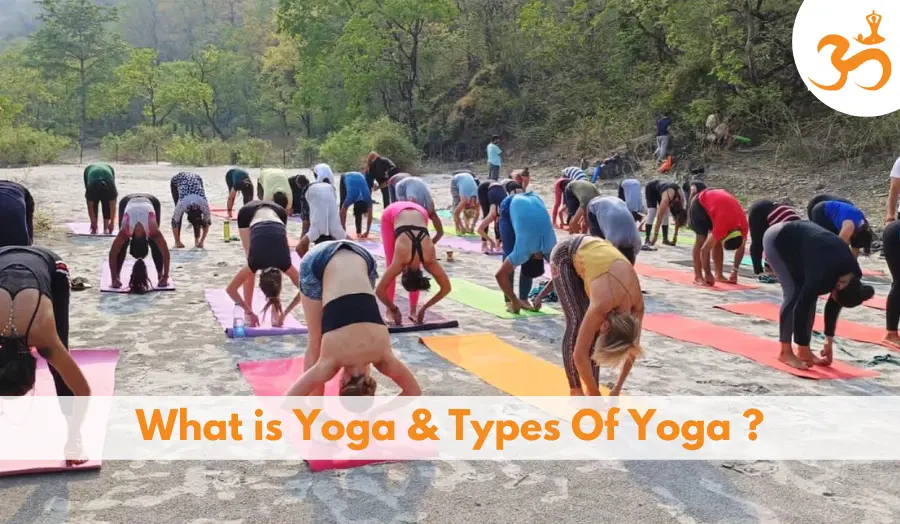
Yoga is a practice from ancient India that unites body, breath and mind; the Sanskrit root "yuj" means to yoke or join. Patanjali's Yoga Sutra 1.2 defines it as "chitta vritti nirodha", the stilling of the mind's fluctuations. Its four classical paths are Raja (meditation), Karma (selfless action), Bhakti (devotion) and Jnana (knowledge). Modern class styles include Hatha, Ashtanga, Vinyasa, Iyengar, Yin, Kundalini, Bikram, Aerial and Yoga Nidra, which differ mainly in pace, structure and focus.
Yoga, a practice often associated with graceful postures and flexibility, goes far beyond physical exercise. It is an intense journey of self-discovery and well-being. In this blog, we'll explore the multifaceted world of yoga, going beyond the mat to understand its deeper dimensions.
The table below compares the styles you are most likely to see on a class timetable. Pace and focus are the two things that separate them; the underlying philosophy is shared.
| Type | Focus | Pace | Best for |
|---|---|---|---|
| Hatha | Basic postures, breathing, steady holds | Slow to moderate | Beginners, building a foundation |
| Vinyasa | Breath-linked flowing sequences | Moderate to fast | Fitness, variety, creative flow |
| Ashtanga | Fixed series of postures in a set order | Fast, vigorous | Discipline, strength, daily routine |
| Iyengar | Precise alignment using props | Slow | Stiff bodies, injury recovery, detail lovers |
| Yin | Long passive holds of 3 to 5 minutes | Very slow | Flexibility, deep tissues, calming down |
| Kundalini | Kriyas, dynamic breath, chanting, meditation | Varies | Energy work, spiritual focus |
| Bikram / Hot | 26 poses in a heated room | Moderate | Heavy sweating, flexibility (with care) |
| Aerial | Poses supported by a silk hammock | Moderate | Core strength, spinal decompression, fun |
| Prenatal | Gentle poses adapted for pregnancy | Slow | Expectant mothers, with a doctor's approval |
| Yoga Nidra | Guided relaxation lying down | Still | Stress, sleep, recovery |
| Laughter Yoga | Laughter exercises with yogic breathing | Light | Mood, groups, older adults |
Yoga is a profound practice encompassing physical postures, meditation, and ethical guidelines. Rooted in ancient India, it strives to unite the individual with the divine and enhance overall well-being. The physical aspect, involving various postures, improves flexibility and strength. Beyond the mat, controlled breathing and meditation promote mental clarity and emotional stability. Ethical principles like truthfulness and non-violence guide practitioners towards a harmonious life. Yoga's ultimate aim is self-realization, fostering a deeper connection with the self and the universe. It's a transformative journey offering physical fitness, mental peace, and spiritual awakening.
If you want to define yoga in detail, the old texts give three complementary answers:
The Hatha Yoga Pradipika, the main manual of physical yoga, adds that Hatha (postures, breath and cleansing practices) is a ladder to Raja Yoga, the yoga of meditation. In plain English: yoga is any disciplined practice that steadies the body and quietens the mind so that awareness can turn inward. The postures are the entry point, not the whole picture.
People turn to yoga for diverse reasons. It's a pathway to physical fitness, promoting flexibility, strength, and balance. The meditative aspect offers mental calm, stress reduction, and improved focus. Many embrace yoga for its holistic approach, benefiting both body and mind. The practice fosters emotional balance, a sense of inner peace, and spiritual growth. It's a means to connect with the self, alleviate physical discomfort, and nurture well-being. Whether seeking relaxation, fitness, or spiritual awakening, yoga's universal appeal lies in its ability to cater to various needs, making it a go-to practice for those in pursuit of balance and vitality.
Yoga, an ancient and revered practice, finds its roots in the mystical land of India. The word 'yoga' is derived from the Sanskrit term 'yuj,' meaning to yoke or unite, signifying the union of the individual self with the divine, or the realization of oneness with the universe.
Before the modern class styles existed, Indian tradition described yoga as four paths, each suited to a different temperament. Most people combine two or three of them without realising it.
| Path | Meaning | Main practice | Suits |
|---|---|---|---|
| Raja Yoga | The royal path, mastery of the mind | Patanjali's eight limbs, seated meditation | Disciplined, meditative people |
| Karma Yoga | The path of selfless action | Work and service without attachment to results | Active, service-minded people |
| Bhakti Yoga | The path of devotion | Kirtan, mantra, prayer, ritual | Emotional, heart-centred people |
| Jnana Yoga | The path of knowledge | Study, reflection, self-enquiry | Analytical, philosophical minds |
Hatha Yoga, the style behind most physical classes today, sits inside Raja Yoga: its postures, pranayama and shatkarmas prepare the body to sit still for meditation. Hatha grew out of the Nath and tantric traditions of medieval India and was later set down in texts such as the Hatha Yoga Pradipika. This is the lineage we teach on our Hatha Yoga Teacher Training in Rishikesh, where the classical practices are taught in their original order: cleansing, posture, breath, mudra, then meditation.
Yoga is a diverse and ancient practice, and over time, various styles and traditions have evolved to cater to different needs and preferences. Here are some of the different types of yoga:
Each type of yoga offers unique benefits, and the choice of style often depends on individual goals, physical abilities, and personal preferences. Whether you seek physical fitness, mental peace, or spiritual growth, there's a yoga practice tailored to your needs.
If you would rather try several of these under one roof than guess from a description, our 200 Hour Multistyle Yoga Teacher Training covers Hatha, Ashtanga, Vinyasa, Iyengar and Yin over 22 days in Rishikesh, with the same teaching team for every style, so you can feel the differences in your own body before choosing one to go deep on.
A simple way to choose is to start from your goal rather than from the style's name:
If you are still undecided, a multistyle course settles it faster than months of trial and error. At Rishikesh Nath Yogshala the 200 Hour Yoga Teacher Training in Rishikesh runs for 22 days, starts on the 5th and 15th of every month, and teaches classical Hatha alongside Ashtanga and Vinyasa, so you compare the styles with the same teachers rather than from videos.
A word of caution: yoga is generally safe, but if you are pregnant, recovering from surgery or an injury, or have high blood pressure, glaucoma or a heart condition, speak to your doctor and tell your teacher before you start. Inversions, deep backbends and hot yoga are not suitable for everyone.
Yoga is renowned for its multifaceted benefits that span physical, mental, and emotional well-being. Here are some of the advantages that make yoga a cherished practice for millions:
The beauty of yoga lies in its versatility: whether you seek physical fitness, mental peace, or spiritual awakening, there's a yoga practice suited to your needs. It's a timeless discipline that continues to transform lives by promoting harmony, balance, and a profound connection with oneself.
Yoga is more than just a series of physical postures; it's a holistic practice that embraces the body, mind, and spirit. Whether you're seeking physical fitness, mental clarity, emotional balance, or a deeper connection with the universe, yoga has something to offer. It's a journey of self-discovery and well-being, inviting you to explore the depths of your own existence.
If you are wondering how to start a career in yoga, you are in the right place. We run a Yoga Alliance certified yoga school in Rishikesh, and it is one of the best places to begin your practice.
Yoga is an ancient Indian discipline that unites body, breath and mind through postures, breathing, meditation and ethical living. Its four classical paths are Raja, Karma, Bhakti and Jnana. Modern class styles include Hatha, Vinyasa, Ashtanga, Iyengar, Yin, Kundalini, Bikram, Aerial, Prenatal and Yoga Nidra, which differ in pace, structure and focus rather than in their underlying philosophy.
In detail, yoga is defined three ways in the classical texts. Patanjali calls it the stilling of the mind's fluctuations (Yoga Sutra 1.2). The Bhagavad Gita calls it evenness of mind (2.48) and skill in action (2.50). Together they describe a practice of steadying the body and breath so the mind settles and awareness turns inward.
Hatha builds a foundation of strength and calm; Vinyasa and Ashtanga improve fitness and stamina; Iyengar corrects alignment and may help recovery from stiffness or injury; Yin lengthens deep tissues; Kundalini and Bhakti support emotional and spiritual balance; Yoga Nidra eases stress and sleep. All styles share the core benefits of flexibility, better breathing and a quieter mind.
Hatha Yoga is the usual starting point because the poses are held slowly with attention to breath and alignment, giving you time to learn. Iyengar is also beginner-friendly thanks to props. Once the basics feel comfortable, try a gentle Vinyasa class for flow. Leave hot yoga and full Ashtanga series until you have a few months of practice.
There is no fixed number. Tradition names four classical paths (Raja, Karma, Bhakti and Jnana), with Hatha as the physical branch of Raja Yoga. Modern studios teach a dozen or more styles, including Hatha, Vinyasa, Ashtanga, Iyengar, Yin, Kundalini, Bikram, Aerial, Prenatal, Restorative and Yoga Nidra, and new variations appear every year.
Hatha classes hold each posture for several breaths with pauses in between, so the pace is slow and the focus is on alignment and breath. Vinyasa links postures into a continuous flow, one movement per breath, so it is faster, warmer and more cardio-like. Hatha suits beginners and calmer practice; Vinyasa suits fitness and variety.
Still unsure which style to start with? Message us on WhatsApp with your goals and experience and we will suggest a class or course that fits, with no obligation.
Welcome to our transformative 22 days 200 Hour Hatha, Ashtanga, Vinyasa Flow, Iyengar, Yin Yoga and Kundalini Yoga Teacher Training Course with Sound Healing Sessions in Rishikesh, India.
The 300 hour yoga teacher training course programme is all about gaining perfection, so you must choose a school that is listed among the top 10 yoga schools.
Rishikesh Nath Yogshala's 100 Hour Yoga Teacher Training in Rishikesh is an intensive 14-day programme designed to give new yoga teachers a solid foundation.
Rishikesh Nath Yogshala runs 100 hour, 200 hour and 300 hour online yoga teacher training with live Zoom sessions plus recordings, so you can start in any month from home.
Ask us anything about dates, fees or what to bring — we usually reply within a few hours.
