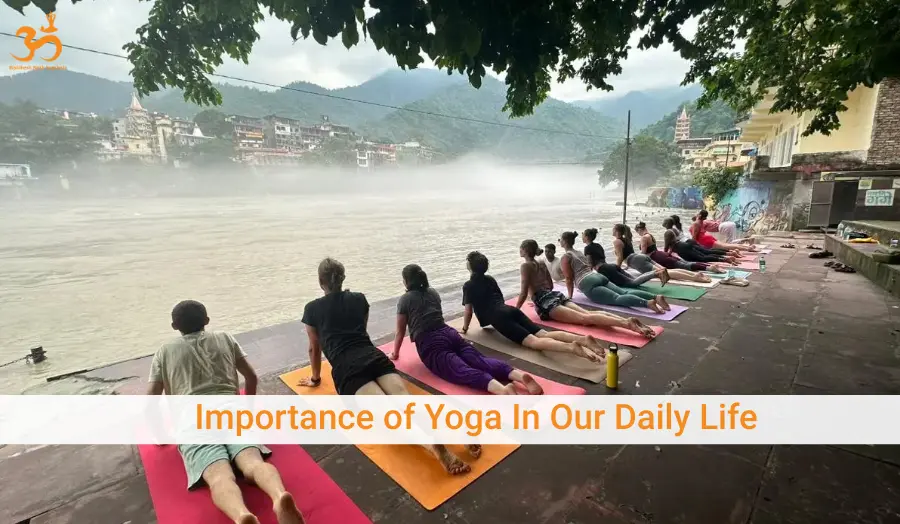
Yoga is important in daily life because a short, regular practice works on the body, the mind and the emotions at the same time. Twenty to thirty minutes a day of asana, pranayama and a few minutes of stillness may help improve flexibility and posture, steady the breath, lower everyday stress, sharpen focus, support better sleep and build emotional balance. Unlike most exercise, it needs no equipment, suits every age, and its habit of awareness carries into work, food and relationships.
Importance of yoga in our daily life: yoga enhances physical health, mental clarity and emotional well-being, fostering a balanced and harmonious daily life. In this article we explain why yoga is important in our life, what changes when you practise every day, how much practice is realistic, and the ten points that answer the question in full. If you are writing an essay on the importance of yoga in daily life, the ten numbered points below give you a ready structure.
| Area of life | How daily yoga helps | Example practice |
|---|---|---|
| Physical health | Stretches and strengthens muscles, improves joint mobility and posture | Surya Namaskar, 6-12 rounds |
| Mental focus | Trains attention through breath and mindful movement | Tadasana with slow breathing, Trataka |
| Stress | Switches on the relaxation response, may help lower stress hormones | Anulom Vilom, 5-10 minutes |
| Emotions | Builds self-awareness and steadier moods | Bhramari, seated meditation |
| Sleep | Calms the nervous system before bed | Viparita Karani, Yoga Nidra |
| Immunity | Less stress and fuller breathing may support the immune system | Bhujangasana, Kapalbhati (if healthy) |
| Work and study | Short breaks reset posture and concentration | Neck rolls, Cat-Cow, three deep breaths |
| Relationships and lifestyle | Yama and niyama guide kinder habits and mindful choices | Ahimsa in speech, a sattvic meal |
In today's fast-paced and stressful world, finding moments of tranquility and inner peace can seem like an elusive quest. Amidst the hustle and bustle of daily life, incorporating a practice that nurtures both the body and mind becomes paramount. Yoga, an ancient practice originating in India, has emerged as a beacon of hope and holistic well-being for millions around the globe. Beyond being a physical exercise, yoga is a way of life that touches every aspect of our being. In this blog, we will explore the profound importance of yoga in our daily lives and how it can positively transform our physical, mental, and emotional well-being.
We will explain the importance of yoga in our daily life point by point.
One of the primary benefits of yoga lies in its ability to promote physical health and flexibility. The various asanas or postures practised in yoga gently stretch and strengthen muscles, improve joint flexibility, and enhance overall body alignment. Through regular practice, practitioners experience increased energy levels, improved posture, and reduced risk of physical ailments. Moreover, yoga is accessible to individuals of all ages and fitness levels, making it a versatile practice that can be customised to suit individual needs.
In a world inundated with distractions, fostering mental clarity and focus is paramount for success and overall well-being. Yoga's emphasis on conscious breathing and mindful movement cultivates a deep sense of awareness and presence. Regular practice helps calm the mind, reduce anxiety, and enhance cognitive function. As the mind becomes more focused and centred, individuals can navigate life's challenges with greater resilience and clarity.
Stress has become an inherent part of modern life, affecting physical and mental health. Yoga serves as a powerful antidote to stress, providing a safe haven to unwind and release tension. The combination of breathing techniques, meditation, and gentle movements triggers the body's relaxation response, which may help lower cortisol levels and promote a sense of calmness and tranquility. By integrating yoga into our daily routine, we can develop effective coping mechanisms to combat the stresses of life. If daily life has left you too drained to even start, a short break away often does it: a few days of morning practice, sattvic food and quiet on a yoga retreat in Rishikesh is how many of our students have reset the habit before taking it home.
Emotional well-being is as vital as physical health in leading a fulfilling life. Yoga encourages self-awareness and introspection, enabling individuals to connect with their emotions without judgement. The practice of yoga allows practitioners to recognise and process emotions, leading to greater emotional intelligence and resilience. Through regular practice, individuals can develop a more balanced and harmonious emotional landscape, fostering healthier relationships with oneself and others.
A robust immune system is essential for warding off illnesses and maintaining optimal health. Some research suggests that yoga may support the immune system by reducing stress and inflammation, thereby helping the body's ability to fight infections and disease. As we embrace yoga as part of our daily routine, we invest in a proactive approach to strengthen our immune response and safeguard our overall well-being.
Yoga is based on the principle of mind-body connection, recognising the intimate relationship between mental and physical well-being. The synchronisation of breath with movement during yoga practice fosters this connection, enabling practitioners to tap into the wisdom of their bodies and cultivate a harmonious balance between the two. This heightened mind-body awareness extends beyond the mat and permeates into daily life, allowing individuals to make conscious choices that support their well-being.
The journey of yoga is not just about mastering complex poses; it is a profound exploration of self-discovery and personal growth. As individuals engage in yoga practice, they peel back the layers of conditioning and connect with their authentic selves. This process of self-inquiry leads to a deeper understanding of one's values, desires, and life purpose, paving the way for personal growth and transformation. Many practitioners reach a point where a daily home practice is not enough and they want to understand the philosophy, anatomy and teaching methods behind it; that is exactly what a 200 Hour Yoga Teacher Training in Rishikesh is for, whether or not you ever plan to teach.
In a world that seldom slows down, achieving restful sleep has become a challenge for many. Yoga's relaxation techniques and mindfulness practices may noticeably improve sleep quality. By calming the mind and relaxing the body before bedtime, individuals can attain better sleep patterns, wake up refreshed, and maintain energy throughout the day.
Yoga studios and classes often serve as welcoming and inclusive communities where like-minded individuals come together to share their passion for yoga. Engaging in yoga practice with others fosters a sense of belonging and support, creating a positive and uplifting environment that encourages growth and camaraderie.
Yoga's holistic philosophy extends beyond individual well-being to encompass environmental consciousness. By embracing a yogic lifestyle, practitioners develop a greater appreciation for the environment and cultivate practices that promote sustainability and mindful living. This alignment with the natural world encourages responsible choices and contributes to a healthier planet.
The realistic daily dose for most adults is 20 to 30 minutes. That is enough for a short warm-up, six to twelve rounds of Surya Namaskar or a handful of standing and seated asanas, five to ten minutes of pranayama and a few minutes of sitting quietly. Consistency matters far more than length: twenty minutes six days a week does more for flexibility, focus and mood than a single two-hour class on Sunday. On busy days, even ten minutes of breathing and a few stretches keeps the habit alive.
Here is the routine our teachers give beginners who want yoga in their day to day life without needing a class every morning. Practise on an empty stomach, on a mat, breathing through the nose.
A word of caution: if you are pregnant, have high blood pressure, a heart condition or a recent injury, check with your doctor and learn from a qualified teacher first, and leave out Kapalbhati and deep backbends until you are cleared. If you cannot travel, structured online yoga teacher training with live teachers is a practical way to learn this same routine at home with someone correcting your alignment.
Modern life adds pressures that earlier generations did not have: long hours at a screen, sitting for most of the day, constant notifications, irregular meals and late nights. Yoga answers each of these directly. Asana undoes the stiffness of sitting, pranayama breaks the shallow breathing that goes with stress, and meditation gives the mind a daily rest from input. The yamas and niyamas, the ethical guidelines of yoga, are just as useful now: moderation (brahmacharya) with screens, contentment (santosha) instead of comparison, and cleanliness (saucha) in food and surroundings. This is why the importance of yoga in modern life is, if anything, greater than it was when the practice began.
Yoga's significance in our daily lives extends far beyond its physical aspects. It is a comprehensive system that nurtures physical health, mental clarity, emotional balance, and spiritual growth. Through the regular practice of yoga, individuals embark on a transformative journey that enhances their overall well-being and fosters a profound connection with themselves and the world around them.
As we integrate yoga into our daily routines, we embark on a path of self-discovery, resilience, and compassion. By embracing the principles of yoga and applying them in our lives, we create a ripple effect of positivity and mindful living that extends far beyond the mat. In this busy and chaotic world, yoga stands as an oasis of tranquility, reminding us of the importance of self-care, presence, and embracing the fullness of life. Embrace the transformative power of yoga, and watch as it enriches your daily life in ways you could have never imagined.
If you are wondering how to start a career in yoga, then you are at the right place. We run an institute in Rishikesh that has been certified by Yoga Alliance for a long time, and it is one of the best places to start.
Yoga is important in daily life because it is one of the few practices that trains the body, breath and mind together. A regular practice may improve flexibility and posture, reduce everyday stress, sharpen concentration and steady the emotions, and its principles of awareness and moderation carry into how we eat, work and treat other people.
The main benefits of yoga in daily life are better flexibility and strength, improved posture, calmer breathing, lower stress, clearer focus, more balanced emotions, better sleep and, over time, support for general immunity. Regular practitioners also report more energy through the day and a stronger sense of connection with their own body.
For most adults, 20 to 30 minutes a day is enough: a few rounds of Surya Namaskar or five to six asanas, five to ten minutes of pranayama and a short meditation. Consistency matters more than length, so a shorter practice done six days a week beats one long weekly class. On busy days, ten minutes still counts.
Modern life means long hours sitting, screens, shallow breathing and constant mental input. Yoga directly counters each of these: asana undoes stiffness from sitting, pranayama restores full breathing, and meditation gives the mind a daily rest. Its ethical guidelines, such as moderation and contentment, also help with screen habits and comparison, which is why yoga matters even more today.
Fix a time, ideally early morning before breakfast, and keep the mat where you can see it. Start with ten to fifteen minutes of simple asanas and breathing, add a few minutes each week, and pair it with an existing habit such as your morning tea. Learning the basics from a qualified teacher, in person or online, helps you practise safely.
Open with a one-line definition of yoga and why it matters today, then use the ten points in this article as body paragraphs: physical health, mental focus, stress, emotional balance, immunity, mind-body connection, self-discovery, sleep, community and sustainable living. Give one example practice for each, and close with how a daily habit changes life beyond the mat.
Have a question about starting a daily practice, or want a teacher to build a routine around your schedule? Message us on WhatsApp and we will reply with the next course and retreat dates.
Welcome to our transformative 22 days 200 Hour Hatha, Ashtanga, Vinyasa Flow, Iyengar, Yin Yoga and Kundalini Yoga Teacher Training Course with Sound Healing Sessions in Rishikesh, India.
The 300 hour yoga teacher training course programme is all about gaining perfection, so you must choose a school that is listed among the top 10 yoga schools.
Rishikesh Nath Yogshala offers a 100 Hour Yoga Teacher Training course in Rishikesh, an intensive programme designed to give new yoga teachers a solid foundation.
Rishikesh Nath Yogshala provides 100 hour, 200 hour and 300 hour yoga teacher training online, with live sessions and recordings.
Ask us anything about dates, fees or what to bring — we usually reply within a few hours.
