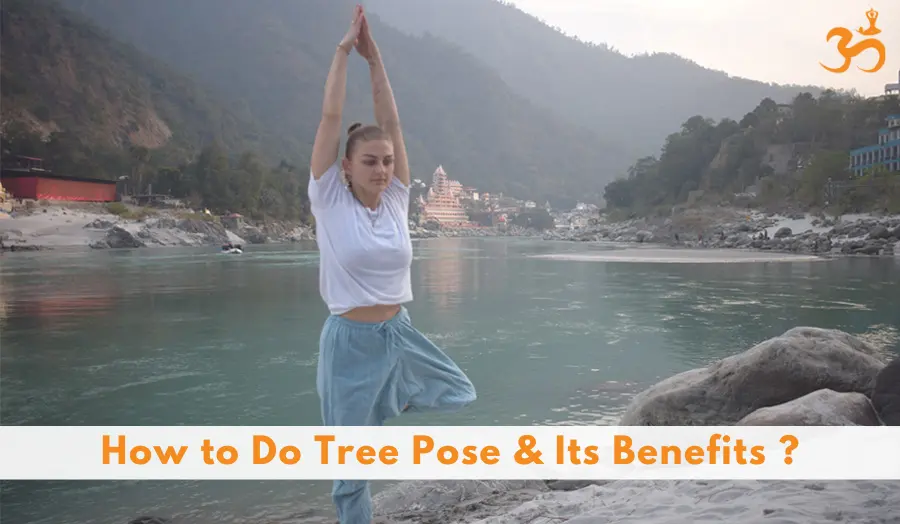
Tree Pose (Vrikshasana) is a standing balance on one leg, the other foot resting on the inner thigh or calf. Practised regularly it may improve balance, strengthen the ankles, calves and thighs, open the hips, straighten posture and sharpen concentration. Hold it for 20 to 30 seconds a side at first, building up to a minute. Never press the foot into the side of the knee, skip it while a leg or ankle injury heals, and use a wall if you feel dizzy or are in later pregnancy.
Yoga is a centuries-old practice originating from ancient India that encompasses physical postures, breath control, meditation, and ethical principles. It promotes holistic well-being by integrating the body, mind, and spirit.
In this article, we will embark on a journey to understand what Tree Pose is, how to do Tree Pose (Vrikshasana), the benefits of Tree Pose and what is prohibited while doing Tree Pose. You will also see the pose called Vrikshasana, Vriksasana or Brikhason (বৃক্ষাসন) depending on the language; they all mean the same standing balance.
| Benefit | Why it happens |
|---|---|
| Better balance | Standing on one leg trains the small stabilising muscles of the ankle, foot and core |
| Stronger legs | The quadriceps, hamstrings and calves of the standing leg work non-stop to hold you steady |
| Sharper focus | Fixing the gaze (drishti) on one still point gives the mind a single job |
| Open hips and inner thighs | The bent knee turns out to the side, stretching the inner thigh and hip |
| Better posture | You have to lengthen the spine and draw the shoulders back to stay upright |
| Calmer mind | Slow, even breathing while balancing may help lower stress |
| Body awareness | Small constant corrections build proprioception, the sense of where the body is |
Tree Pose, known as Vrikshasana in Sanskrit, is a standing yoga posture that involves balancing on one leg while the other foot is placed against the inner thigh or calf of the standing leg. The arms can be extended overhead or kept at heart centre. This pose improves balance, strengthens the legs, opens the hips, and cultivates focus and concentration. It symbolises stability, rootedness, and connection to nature. The name comes from vriksha, the Sanskrit word for tree: the standing leg is the trunk, the foot the roots, and the arms the branches.
Tree Pose looks simple, but the details matter. Follow these steps slowly, and keep a wall within reach the first few times you try it.
| Step | Action | Tip |
|---|---|---|
| 1 | Stand tall in Tadasana, feet together | Spread the toes, weight even across the foot |
| 2 | Shift your weight onto the left foot | Keep the standing knee soft, not locked |
| 3 | Bend the right knee and place the sole on the inner left thigh or calf | Never on the side of the knee joint |
| 4 | Press the foot and the thigh into each other | This keeps the hips level and square |
| 5 | Hands in prayer at the chest, or reach overhead | Shoulders relaxed, away from the ears |
| 6 | Fix your gaze on one still point | Breathe slowly for 20 to 30 seconds |
| 7 | Lower the foot and repeat on the other side | Rest for a breath in Tadasana between sides |
Watch our teacher demonstrate the pose in this short video: Rishikesh Nath Yogshala: Tree Pose (Vrikshasana) to improve the balance of the physical and mental body, from the Rishikesh Nath Yogshala YouTube channel.
Balance poses are one of the first things students struggle with, which is why on our 200 Hour Yoga Teacher Training in Rishikesh Vrikshasana is covered in the Hatha asana classes, with the teacher correcting the foot, hips and gaze in person rather than from a video. The course runs for 22 days and starts on the 5th and 15th of every month.
The Tree Pose (Vrikshasana) offers a range of physical, mental, and emotional benefits. Here are some of the advantages of Tree Pose:
These benefits build up slowly with regular practice; many practitioners notice steadier balance after a few weeks of daily holds. If you would like a teacher's eye on your standing poses before committing to a full course, the 14-day 100 Hour Yoga Teacher Training in Rishikesh covers foundation standing postures like this one with a teacher correcting alignment, from $275 including stay and meals.
Vrikshasana is called Brikhason in Bengali (বৃক্ষাসন) and Vrikshasan in Hindi (वृक्षासन). Its main benefits, in simple English:
Hold each side for 20 to 30 seconds, breathe slowly through the nose, and practise near a wall if you are new. Avoid it if you have a recent leg injury or severe dizziness, and never rest the foot on the side of the knee.
While Tree Pose (Vrikshasana) is generally considered safe for most people, there may be certain circumstances or conditions where it is advised against or should be approached with caution. Here are some instances where Tree Pose might be prohibited or not recommended:
Teachers who already hold an RYT-200 and want to go deeper into adapting balance poses for students with injuries, older bodies or pregnancy can continue on the 300 Hour Yoga Teacher Training in Rishikesh, a 22-day advanced course.
Tree Pose can be modified by placing the foot on the inner calf instead of the inner thigh for those who need more stability or by using a wall or chair for support. It is important to keep the hips level and engage the core muscles for stability throughout the pose. Practise regularly to improve balance, concentration, and strength.
It is crucial to listen to your body and honour its limitations when practising yoga. If you have any concerns or medical conditions, it is always best to consult a healthcare professional or a qualified yoga instructor before attempting new poses or modifying your practice. Additionally, if you experience pain or discomfort during any yoga pose, including Tree Pose, it is essential to ease out of the posture and seek guidance from a knowledgeable instructor.
Do you want to become a professional yoga teacher? Rishikesh Nath Yogshala is a Yoga Alliance certified yoga school and our 200-hour yoga certification programme is your entry point to a successful career.
Tree Pose, or Vrikshasana, may help improve balance, concentration and stability. It strengthens the standing leg, ankle and core, stretches the hips and inner thighs, and encourages a taller posture. Because you have to breathe slowly and fix the gaze on one point, many practitioners also find it calming and grounding, which is why it is often used to settle the mind before meditation.
Hold Tree Pose for 20 to 30 seconds on each leg initially, gradually increasing to a minute as your balance improves. Focus on steady breath and concentration rather than the clock. Repeat 2 to 3 times per leg for a well-rounded practice, and always do both sides so the legs develop evenly.
Tree Pose symbolises rootedness, balance, and growth. Emulating a tree, it encourages practitioners to stand firm through the standing leg, yet be flexible like branches swaying in the wind. In the Hatha tradition it is also a reminder that stillness in the body comes from a steady breath and a steady gaze, not from tension.
Tree Pose varies in difficulty. For beginners it may be challenging to balance, but with practice it becomes more accessible. Start with the foot on the calf or with the toes still touching the floor, keep one hand on a wall, and hold for a few breaths only. Many people notice steadier balance after a few weeks of regular practice.
People with a recent injury to the leg, hip, knee or ankle should wait until it has healed. Anyone with severe dizziness or vertigo should practise only with wall support, and pregnant practitioners should check with their doctor and use a wall in later months. Those with uncontrolled high blood pressure should check with a doctor first, keep the hands at the chest and never hold the breath.
For most people Tree Pose is gentle enough to practise daily, and regular practice is one of the best ways to build balance. Two or three holds of 20 to 30 seconds on each side is plenty. If a knee, hip or ankle feels sore afterwards, shorten the hold or move the foot lower onto the calf, and take a rest day if the pain continues.
Have a question about Tree Pose, or would you like a teacher to check your balance poses in person in Rishikesh? Message us on WhatsApp and we will get back to you.
Welcome to our transformative 22 Days 200 Hour Hatha, Ashtanga, Vinyasa Flow, Iyengar, Yin Yoga and Kundalini Yoga Teacher Training Course with Sound Healing Sessions in Rishikesh, India.
The 300 hour yoga teacher training course programme is all about gaining perfection, so you must choose a school that is listed among the top 10 yoga schools.
Ask us anything about dates, fees or what to bring — we usually reply within a few hours.
