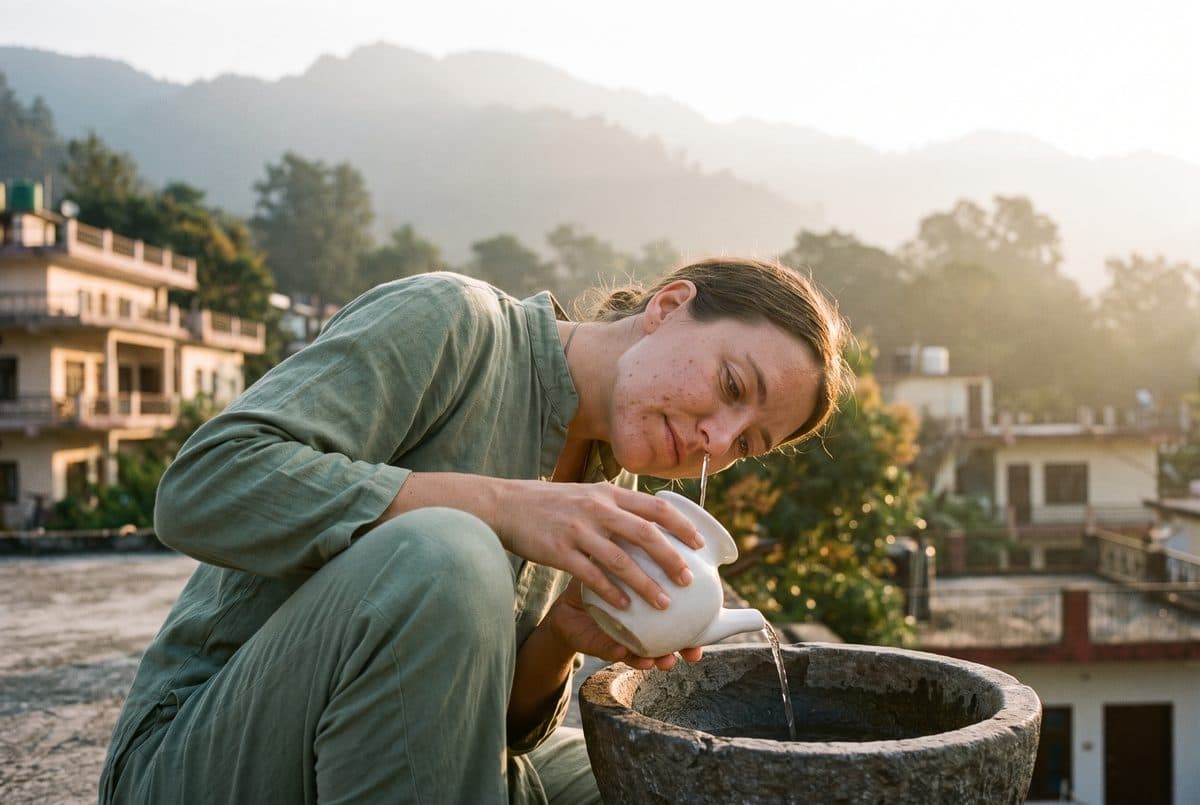
Jal neti is a Hatha Yoga shatkarma (cleansing practice) that rinses the nasal passages with lukewarm saline water poured through a neti pot. Its main benefits are clearer nasal passages and easier breathing, and regular practice may help reduce colds, sinus pressure and snoring while leaving the mind calmer for pranayama. Most healthy adults can do it daily, in the morning before practice. Use boiled or distilled water, dry the nose well afterwards, and skip it during a nosebleed, ear infection or acute sinus infection.
In this article we cover what jal neti kriya is, how to do jal neti step by step, the benefits and side effects of jal neti, its importance in Hatha Yoga, and the precautions and safety tips that keep the practice comfortable.
| Benefit | What it does | Who it helps |
|---|---|---|
| Clears congestion | Flushes mucus, dust and pollen out of the nose | Allergy and sinus sufferers |
| Easier breathing | Opens both nostrils for fuller, quieter breaths | Pranayama students, mild asthma (with a doctor's advice) |
| Fewer colds | Washes out irritants before they settle | People who catch colds often, city dwellers |
| Less sinus pressure | May ease heaviness and headache around the sinuses | Chronic sinusitis |
| Calmer, clearer mind | Free nasal breathing may help settle the nervous system | Meditators, desk workers |
| Less snoring | Reduces night-time nasal blockage | Snorers and light sleepers |
| Fresher eyes and face | Said to stimulate tear ducts and facial circulation | Screen-heavy eyes |
Jal Neti Kriya is a traditional yogic practice aimed at cleansing the nasal passages using lukewarm saline water. This technique involves using a Neti Pot, which allows the saline solution to flow through one nostril and out the other, effectively removing mucus, allergens and impurities. Practising Jal Neti helps improve breathing, supports respiratory function and may help prevent sinus-related issues.
The term "Jalneti" comes from two Sanskrit words: "Jal", meaning water, and "Neti", meaning nasal cleansing. It is one of the six purification techniques (Shatkarmas) in Hatha Yoga, aimed at cleansing the nasal passages to promote better breathing and overall health. The same six kriyas are taught as part of our Hatha Yoga Teacher Training in Rishikesh, because classical Hatha begins with a clean body before asana and pranayama.
To perform Jalneti, a special Neti pot is used, which has a spout that fits comfortably into the nostril. Here is a simple step-by-step guide:

Prefer to watch it done? See Jal Neti Kriya: how to do Jalneti Kriya on the Rishikesh Nath Yogshala YouTube channel.
If you know the practice as jalneti kaise kare or जलनेती क्रिया, here is the method in short, in simple English:
Done in the morning on an empty stomach, the whole practice takes about five minutes.
Nasal cleansing, known as Neti Kriya, holds significant importance in yoga, particularly in Hatha Yoga. This practice purifies the nasal passages, allowing for better airflow and improved breathing, which is essential for effective pranayama (breathing exercises) and meditation. By removing mucus, dust and allergens from the nasal cavity, nasal cleansing supports respiratory health and may help prevent issues like sinusitis, allergies and colds.
In yoga, smooth, unobstructed breathing is vital for energy flow and focus. Clean nasal passages help balance the body's internal energy, leading to better mental clarity, relaxation and enhanced physical performance. Regular nasal cleansing also promotes emotional balance by calming the nervous system, reducing stress and improving overall well-being.
Thus, nasal cleansing is a foundational practice in yoga, supporting both physical health and spiritual progress. At Rishikesh Nath Yogshala, jal neti is taught in the early-morning session of our yoga retreat in Rishikesh, before pranayama, so that guests learn the technique properly and start each day with a clear breath. On the 7 day yoga retreat in Rishikesh it is taught on the second morning and practised through the week.
Jal neti benefits and side effects go together: almost every side effect comes from the wrong water, the wrong salt or the wrong angle, and each one has a simple fix.
| Side effect | Why it happens | How to prevent it |
|---|---|---|
| Stinging or burning | Too much or too little salt; water too hot or too cold | Half a teaspoon per 250 ml; water at body temperature |
| Water dripping later | Water left in the sinuses | Bend forward and exhale sharply through the nose several times |
| Ear discomfort | Pouring too fast or tilting the head back | Pour slowly, mouth open, head tilted sideways |
| Dryness or irritation | Practising too often | Cut back to 2-3 times a week and rest a few days |
| Infection (rare) | Untreated tap water or a dirty pot | Boiled or distilled water; wash and dry the pot after every use |
Safety note: never use untreated tap water for jal neti. Boil it and let it cool to lukewarm, or use distilled water, and keep the neti pot clean and dry between uses. If you have a heavy cold, a blocked ear or a nosebleed, wait until it has settled.
While Jalneti is generally safe, it is important to follow these precautions:
Guidance matters most for the first few rounds, when the angle of the head and the strength of the saline are still new. Shatkarma, including jal neti, is part of the syllabus of our 200 Hour Yoga Teacher Training in Rishikesh, so trainees learn it with a teacher present rather than from a video.
The frequency of practising Jalneti depends on personal needs. For general nasal hygiene, practising 2-3 times a week is usually enough. If you suffer from allergies, sinus issues or nasal congestion, you can perform Jalneti daily to relieve symptoms. However, overuse may dry out the nasal passages, so it is important to balance practice with the body's needs.
Beginners should start slowly and gradually increase frequency as they become more comfortable. It is recommended to practise Jalneti in the morning, and always use clean, lukewarm water with the right amount of salt to ensure safety.
Jalneti is a simple yet powerful practice that promotes overall wellness by maintaining nasal hygiene and improving respiratory health. It helps remove toxins, dust and allergens from the nasal passages, leading to clearer breathing and helping to prevent issues like sinusitis and allergies. By enhancing oxygen flow, Jalneti supports mental clarity and emotional balance and reduces stress.
Regular practice supports the immune system, boosts energy levels and improves focus during meditation and pranayama. As a natural and effective technique, Jalneti is essential for anyone seeking a holistic approach to physical, mental and spiritual well-being.
Want to become a professional yoga teacher? Rishikesh Nath Yogshala is a Yoga Alliance certified yoga school and our 200-hour yoga certification programme is your entry point to a teaching career.
Yes. Most healthy adults can do jal neti once a day, ideally in the morning before pranayama. If your nose feels dry or irritated, reduce it to two or three times a week. People with an active nosebleed, ear infection or acute sinusitis should pause until it settles and, if in doubt, ask a doctor.
Jal neti clears mucus, dust and pollen from the nasal passages, so breathing is easier and both nostrils open evenly for pranayama. Regular practitioners often report fewer colds, less sinus pressure and less snoring. Traditionally it is also said to calm the mind and refresh the eyes. It is a hygiene practice, not a medical treatment.
Done correctly, side effects are minor: brief stinging if the salt or temperature is wrong, water dripping from the nose later, or mild dryness if practised too often. Using untreated tap water or a dirty pot can, rarely, cause infection, so always use boiled or distilled water and dry the nose well afterwards.
The best time to practise jal neti is early in the morning, ideally on an empty stomach and before asana or pranayama. An evening round is fine after a dusty day, but leave at least an hour before lying down so the sinuses can drain fully and no water is left behind.
It is not recommended to perform jal neti without salt. Lukewarm saline water is what makes the practice comfortable and effective. The salt matches the water to the body's own fluids, preventing irritation or a stinging sensation in the nasal passages. Use non-iodised salt, about half a teaspoon per 250 ml of water.
While jal neti is a beneficial practice, it is not suitable for everyone. People with severe nasal infections, chronic nosebleeds, ear infections or a deviated septum should avoid jal neti unless advised by a healthcare professional. If you have a heavy cold or blocked sinuses, wait until you are feeling better to avoid irritation.
Yes, you can drink water after performing jal neti, but it is recommended to wait for about 15-20 minutes. Drinking water afterwards helps to flush out toxins and keep you refreshed, supporting the purifying effects of the practice.
Neti kriya primarily cleanses the nasal passages, the gateway to your respiratory system. By flushing out impurities, mucus and allergens from the nose, it purifies the sinuses and enhances breathing.
Have a question about jal neti or want to learn the shatkarmas with a teacher? Message us on WhatsApp and we will reply with the next course and retreat dates.
Welcome to our transformative 22 days 200 Hour Hatha, Ashtanga, Vinyasa Flow, Iyengar, Yin Yoga and Kundalini Yoga Teacher Training Course with Sound Healing Sessions in Rishikesh, India.
See the 200 Hour Yoga Teacher Training in Rishikesh or book your place.
The 300 hour yoga teacher training course programme is all about gaining perfection, so you must choose a school that is listed among the top 10 yoga schools.
See the 300 Hour Yoga Teacher Training in Rishikesh or book your place.

Students at the shala practising Jal Neti with a neti pot.
Ask us anything about dates, fees or what to bring — we usually reply within a few hours.
