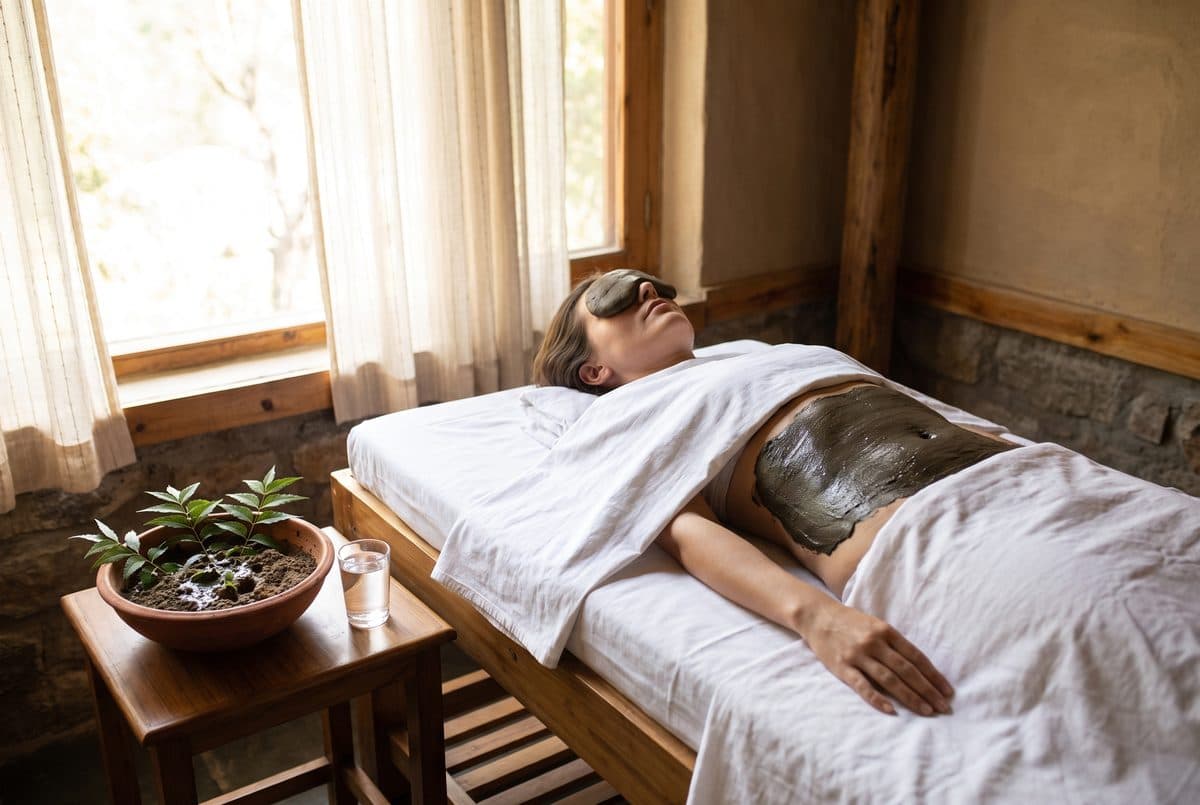
Mud therapy is a naturopathy treatment that applies clean, mineral-rich mud to the body, either as a local pack (on the abdomen, eyes, face or a painful joint) or as a full mud bath. The cool, moist mud is traditionally used to draw heat and impurities from the skin, ease inflammation and calm the nerves, and abdominal packs are used to support digestion. A home mud pack takes 20-30 minutes. Avoid it on open wounds, during fever or on very sensitive skin.
In this article we look at what mud therapy is, how to do mud therapy, the benefits of mud therapy, the types of mud used in therapy, and its precautions and side effects.
| Type | How it is applied | Used for | Typical time |
|---|---|---|---|
| Abdominal mud pack | Cool wet mud, about 1-2 cm thick, laid on a thin cotton cloth over the belly | Constipation, indigestion, gas, abdominal heat | 20-30 minutes |
| Eye mud pack | Small mud pads placed over closed eyes | Tired or strained eyes, screen headaches | 20-30 minutes |
| Face mud pack | Thin layer spread over the face and left to dry | Acne, oily skin, dull complexion | 20-30 minutes |
| Local (joint) mud pack | Thicker pack on the knee, shoulder or lower back | Joint pain, stiffness, swelling | 30-45 minutes |
| Mud bath | Whole body coated or immersed in mud, followed by a rinse or short sunbath | General cleansing, skin nourishment, relaxation | 30-60 minutes |
| Mud wrap | Mud spread over the body, which is then wrapped in cloth | Skin toning, excess oil, relaxation | 30-45 minutes |
These times are the usual naturopathy guidelines. A therapist will shorten them for children, elderly people or anyone who starts to feel chilled.
Mud therapy is a natural healing practice that uses mud to detoxify, refresh and rejuvenate the body. It is widely used in naturopathy for its cooling and therapeutic effects. Rich in minerals, mud helps absorb toxins, soothes inflammation and promotes overall well-being.
In naturopathy, earth is one of the five classic elements of nature cure, alongside water, air, sunlight and fasting or diet. Mud therapy is simply the earth treatment. Our article on naturopathy explains how these five treatments fit together and why they are usually combined rather than used alone.
Mud therapy has been practised for centuries across different cultures. Ancient Egyptians used mud from the Nile for skincare, while Ayurvedic traditions incorporated mud therapy to treat various ailments. The practice also finds mention in Greek and Roman wellness treatments, showing its long-standing place in holistic healing.
Whatever the type, the mud used for mud therapy must be clean. Naturopathy centres usually take it from about a metre below the surface, well away from roads, drains and chemically treated farmland, then sun-dry it, powder it, sieve it and soak it in water a few hours before use. The term "active mud" that you may see on cosmetic products simply means mineral-rich mud or clay (such as Dead Sea mud or bentonite clay) sold for body masks and wraps; it works on the same principle as the black mud and clay used in naturopathy.
The science behind mud therapy: Mud holds moisture and temperature for a long time, which is why a cool pack stays cool and a warm pack stays warm. This makes it useful for stimulating circulation, relieving pain and reducing inflammation. The minerals present in mud are believed to be absorbed through the skin, nourishing the body from within.
How it helps in cooling and healing the body: Mud therapy is traditionally used to balance body temperature and cool down inflammation. It supports the natural healing process by drawing out impurities and revitalising the skin and organs.
A simple abdominal or face mud pack is easy to do at home and is the best way to start.
Use fresh mud for each pack and never reuse it. The same principles of rest, sattvic food, clean water and time outdoors run through the daily routine of a yoga retreat in Rishikesh, which is why naturopathy and yoga are so often practised side by side. The free afternoons on the 7 day yoga retreat in Rishikesh are long enough for a nature-cure practice like this.
If you are training to teach yoga, a basic understanding of nature cure helps you answer the questions students ask about diet, rest and simple home remedies. Yogic lifestyle and diet are part of the philosophy classes on our 200 Hour Yoga Teacher Training in Rishikesh, and graduates who already hold an RYT-200 can go further with the 300 Hour Yoga Teacher Training in Rishikesh.
Mud therapy (mitti chikitsa, or मड थेरेपी) is gentle, but it is not free of harm if done carelessly. The main risks are skin infection from dirty or contaminated mud; itching, rash or allergy in people with sensitive skin; chills, body ache or a worsened cold if a cool pack is kept on too long or used in cold weather; and dry skin from daily face packs. Mud is not a replacement for medical treatment, so anyone with a serious illness should use it only with a doctor's or naturopath's advice.
Mud therapy is a natural, low-cost and generally safe way to cleanse and refresh the body. Whether you are looking to improve skin health, ease aches and pains, or simply relax, adding mud therapy to your wellness routine can offer real benefits. With its long history in traditional medicine and modern naturopathy, mud therapy remains a useful tool for holistic healing and rejuvenation.
If you want to become a professional yoga teacher, Rishikesh Nath Yogshala is a Yoga Alliance certified yoga school and our 200-hour yoga certification programme is your entry point to a successful career.
To do mud therapy at home, mix clean, sieved mud or Multani mitti with water to form a smooth paste. Apply it as a mud pack on the face, abdomen or a painful joint, spreading it on a thin cloth for the abdomen. Leave it for 20-30 minutes, then rinse with lukewarm water. Start with two or three sessions a week.
Naturopathy uses two broad forms. Mud packs are local applications, most often the abdominal pack for digestion, the eye pack for tired eyes, the face pack for skin, and packs on painful joints. Mud baths and mud wraps treat the whole body at once for cleansing, skin nourishment and relaxation. Packs are usually kept on for 20-30 minutes and baths for up to an hour.
Mud used in naturopathy includes black mud, Fuller's earth (Multani mitti) and clay mud. These types of mud are rich in minerals, help draw out impurities and support natural healing. Whichever you use, it must come from a clean source, be free of stones and chemicals, and be dried, powdered and sieved before soaking.
The abdominal mud pack is the most common mud therapy for the stomach. A cool pack placed over the belly for 20-30 minutes on an empty stomach is traditionally used to relieve constipation, gas, indigestion and abdominal heat, and to calm the digestive system. It is a supportive practice, not a cure, so persistent stomach pain needs a doctor.
Side effects are uncommon when clean mud is used correctly. They include skin irritation or allergy in sensitive people, infection if the mud is contaminated, chills or a worsened cold if a cool pack is kept on too long, and dryness from very frequent face packs. Avoid mud therapy on open wounds, during fever and on the abdomen in pregnancy.
Mud therapy is used to cleanse the body, improve skin health, relieve stress, reduce inflammation and promote relaxation. It also aids digestion, supports metabolism and provides gentle natural support for everyday complaints such as constipation, tired eyes, acne and stiff joints.
Mudding, or applying mud to the body, draws out impurities, improves skin health, reduces inflammation and promotes relaxation. It supports blood circulation, eases joint and muscle pain, soothes stress and helps digestion. Rich in minerals, mud therapy nourishes the skin, balances body temperature and aids natural healing and rejuvenation.
Naturopathy texts usually credit the 19th-century German nature-cure pioneers, especially Sebastian Kneipp and Adolf Just, with popularising mud and earth treatments in their modern form. In India, mud therapy became part of the nature-cure movement in the early 20th century and is now a standard treatment in naturopathy hospitals.
Have a question about mud therapy, or want to combine simple naturopathy with daily yoga, sattvic food and rest in the Himalayas? Message us on WhatsApp and we will reply with the next retreat and course dates.
Welcome to our transformative 22 days 200 Hour Hatha, Ashtanga, Vinyasa Flow, Iyengar, Yin Yoga and Kundalini Yoga Teacher Training Course with Sound Healing Sessions in Rishikesh, India.
The 300 hour yoga teacher training course programme is all about gaining perfection, so you must choose a school that is listed among the top 10 yoga schools.
Ask us anything about dates, fees or what to bring — we usually reply within a few hours.
